4500 BCE – 400 CE
Born From Necessity: The First Breath-Hold Divers
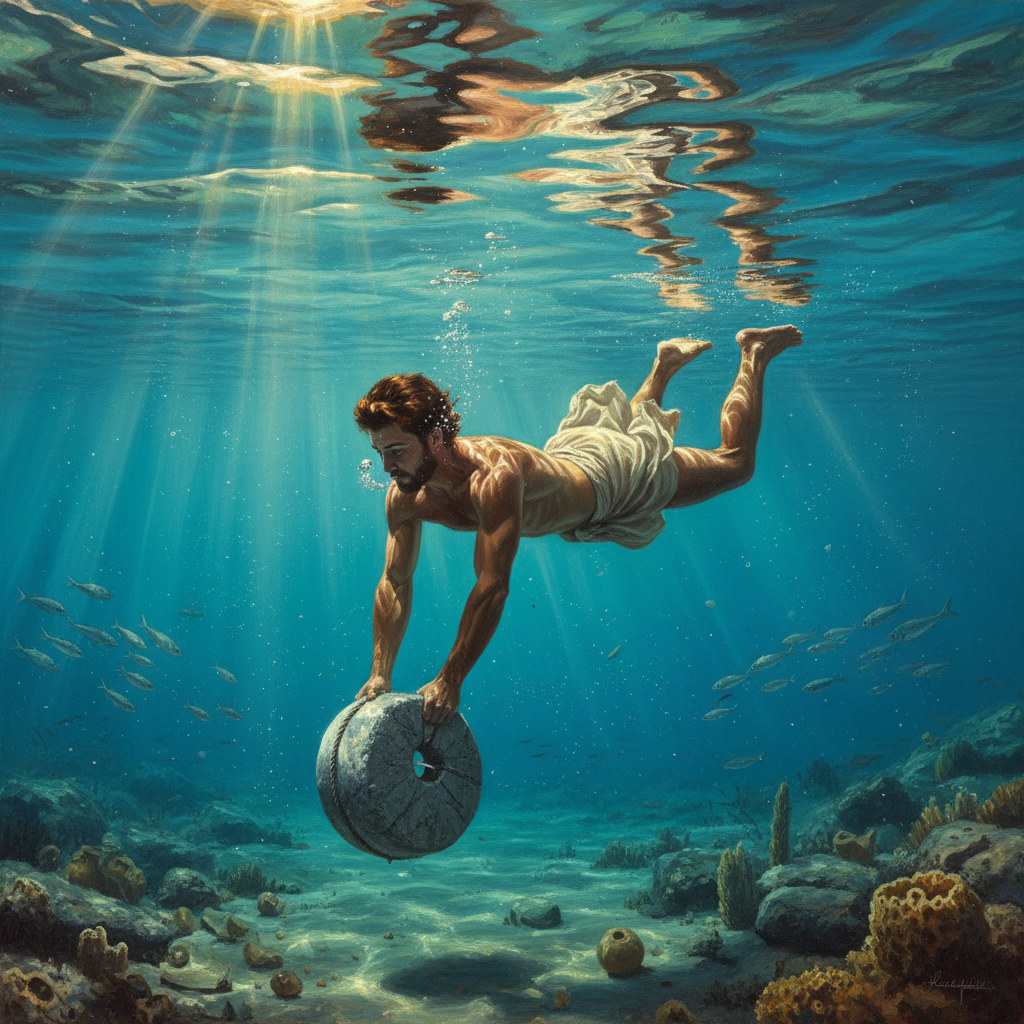
Long before wetsuits, tanks, or regulators, humans were already exploring the underwater world — armed with nothing more than a deep breath and sheer determination. Archaeological evidence suggests free-diving for food and resources dates back over 6,000 years, making it one of humanity's oldest aquatic pursuits.
Ancient Greek and Roman civilisations built entire industries around breath-hold diving. Sponge collectors, pearl hunters, and shellfish gatherers would descend to surprising depths day after day, developing extraordinary lung capacity and technique passed down through generations. Greek historian Thucydides documented military divers cutting anchor ropes during naval battles as early as 415 BCE — proving that underwater capability was already being weaponised.
"Sponge divers in ancient Greece could hold their breath for over four minutes and descend beyond 30 metres."
In East Asia, the tradition of the Ama divers — predominantly women — stretches back at least two thousand years along the coasts of Japan and Korea. These divers could reach depths of 20–30 metres on a single breath, harvesting abalone, seaweed, and pearls. Their techniques were so refined that many still practice today, a living link to our earliest underwater heritage.