
Spearfishing for Beginners
Everything you need to know before you pick up a speargun — safety, gear, technique, and ethics.
The VisPro Dive Team is made up of experienced Australian divers, marine conditions specialists, and ocean-data engineers who are passionate about helping divers make smarter decisions about when and where to dive.
What is Spearfishing?
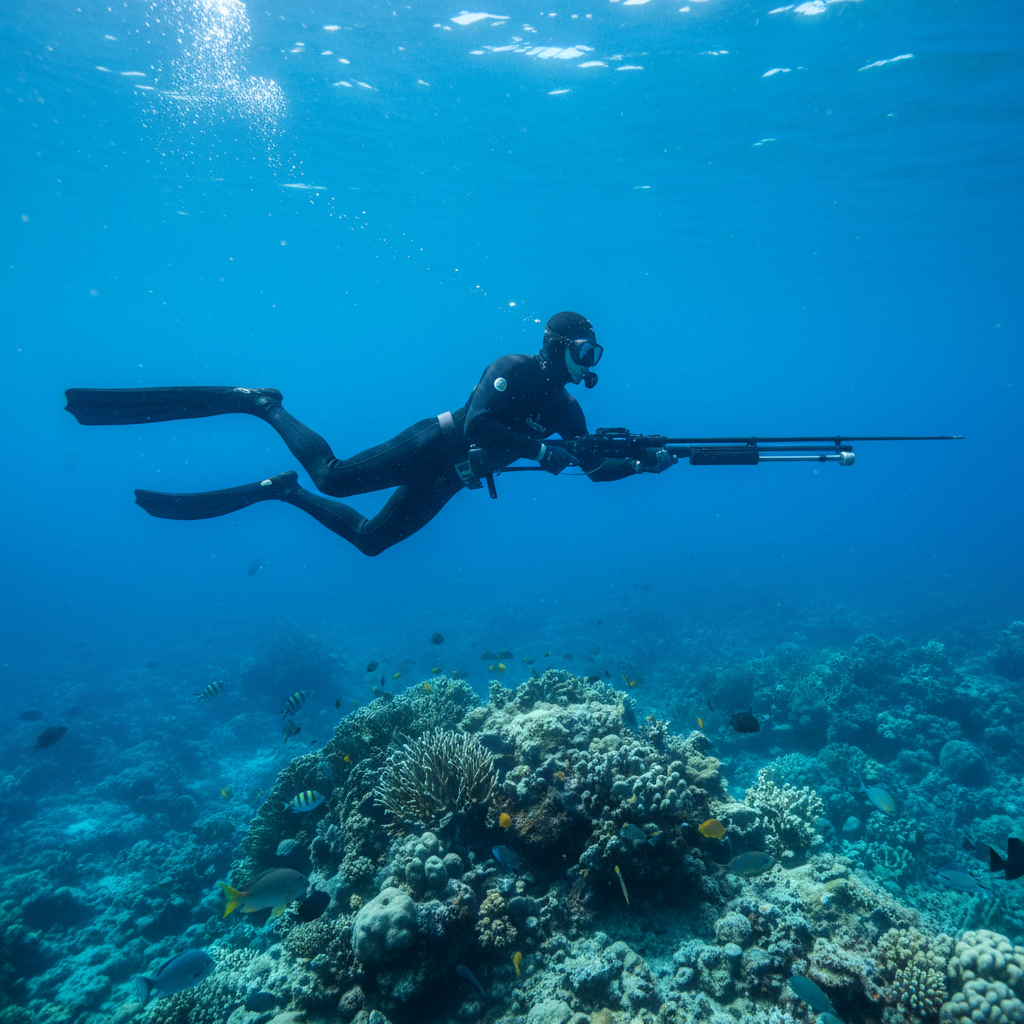
Spearfishing is one of the oldest and most sustainable forms of fishing. Rather than dragging nets or using bait lines that indiscriminately catch whatever comes along, spearfishing requires you to physically see the fish you're targeting before you shoot. This means you select only the species, size, and quantity you want — making it one of the most selective and low-waste ways to catch wild seafood.
Modern spearfishing is done on breath-hold (freediving) or with scuba gear, using a speargun, Hawaiian sling, or hand spear. Most beginners start in shallow coastal reefs, estuaries, or rock platforms before progressing to deeper offshore sites.
Is Spearfishing Right for You?
Spearfishing suits people who are comfortable in the ocean, enjoy freediving, and are interested in sustainable food sourcing. Before you begin, you should be a confident swimmer, comfortable putting your face underwater, and ideally have some snorkelling experience.
You don't need to be a certified diver, but a freediving course is strongly recommended — it teaches breath-hold safety, equalisation, and how to move efficiently underwater. Many spearfishers combine their passion with a love of the ocean, marine life, and being self-sufficient in the water.
How to Get Started
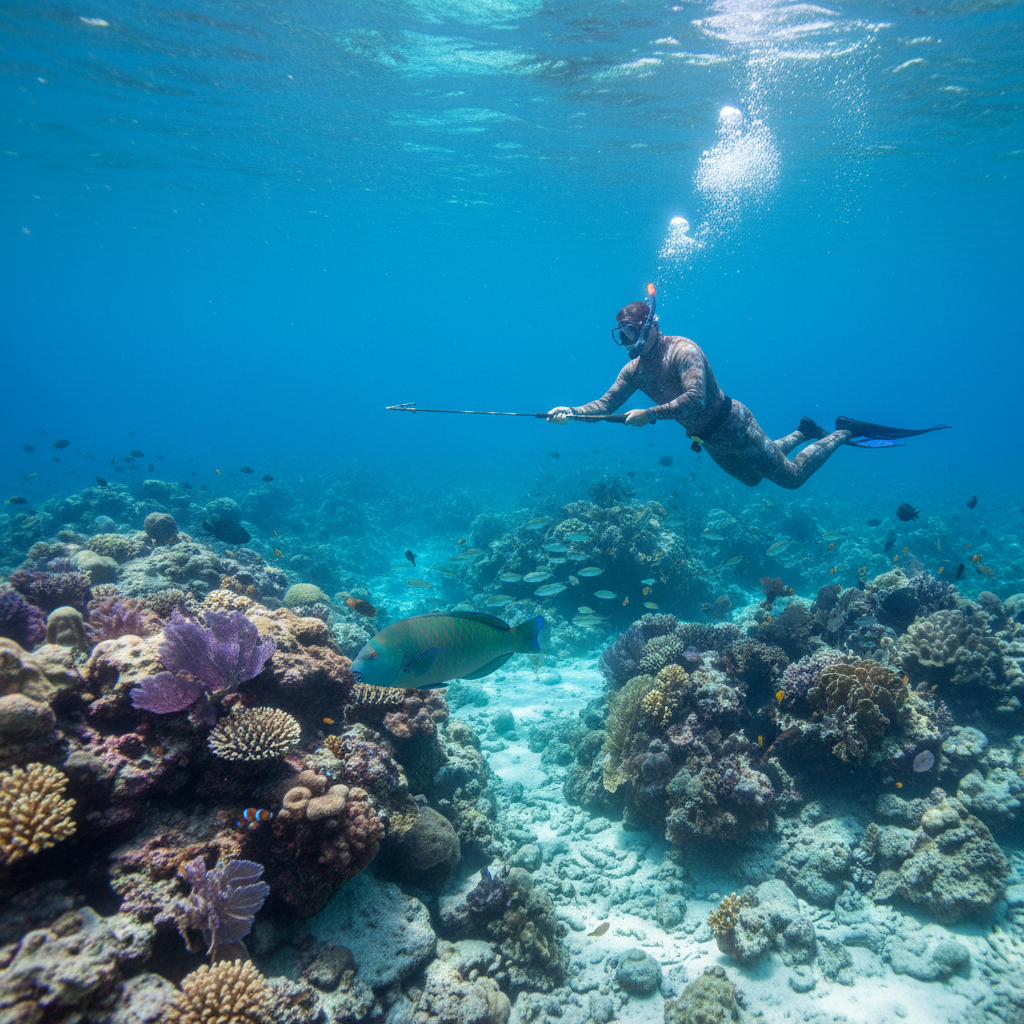
1. Learn to Freedive First
Before you pick up a speargun, get comfortable holding your breath underwater. A basic freediving course (like PADI Freediver or SSI Freediving) will teach you safe breathe-up techniques, how to equalise your ears, and how to recover safely between dives. This is the single most important step.
2. Get the Basic Gear
Start simple: a low-volume mask, long blade fins, a 5mm wetsuit, and weight belt. You don't need an expensive speargun on day one — borrow or hire one, or start with a basic 60cm band-powered gun for shallow reefs. See our Spearfishing Equipment Checklist for a full breakdown.
3. Learn Local Regulations
Every state and territory in Australia has different rules — size limits, bag limits, protected species, and no-take zones. Check your state fisheries authority before you wet a fin. Ignorance is not an excuse and fines can be significant.
4. Always Dive with a Buddy
Never spearfish alone. Shallow Water Blackout (SWB) is a real and deadly risk — a diver can lose consciousness underwater with no warning. Your buddy's job is to watch you constantly while you're underwater and be ready to rescue you if you don't surface.
5. Start Shallow
Begin in 3–6 metres of water. Focus on getting comfortable, equalising, and understanding how the reef works before you try to go deeper. Most beginner-friendly fish are found in the shallows anyway.
6. Learn to Identify Fish
Before you head out, study up on the target species in your area and the protected species you must not shoot. Get a local reef fish ID book or app. The golden rule: if you're not 100% sure what it is, don't shoot it.
Safety Fundamentals
Never hyperventilate before a dive
It masks your urge to breathe without actually increasing oxygen, greatly increasing blackout risk.
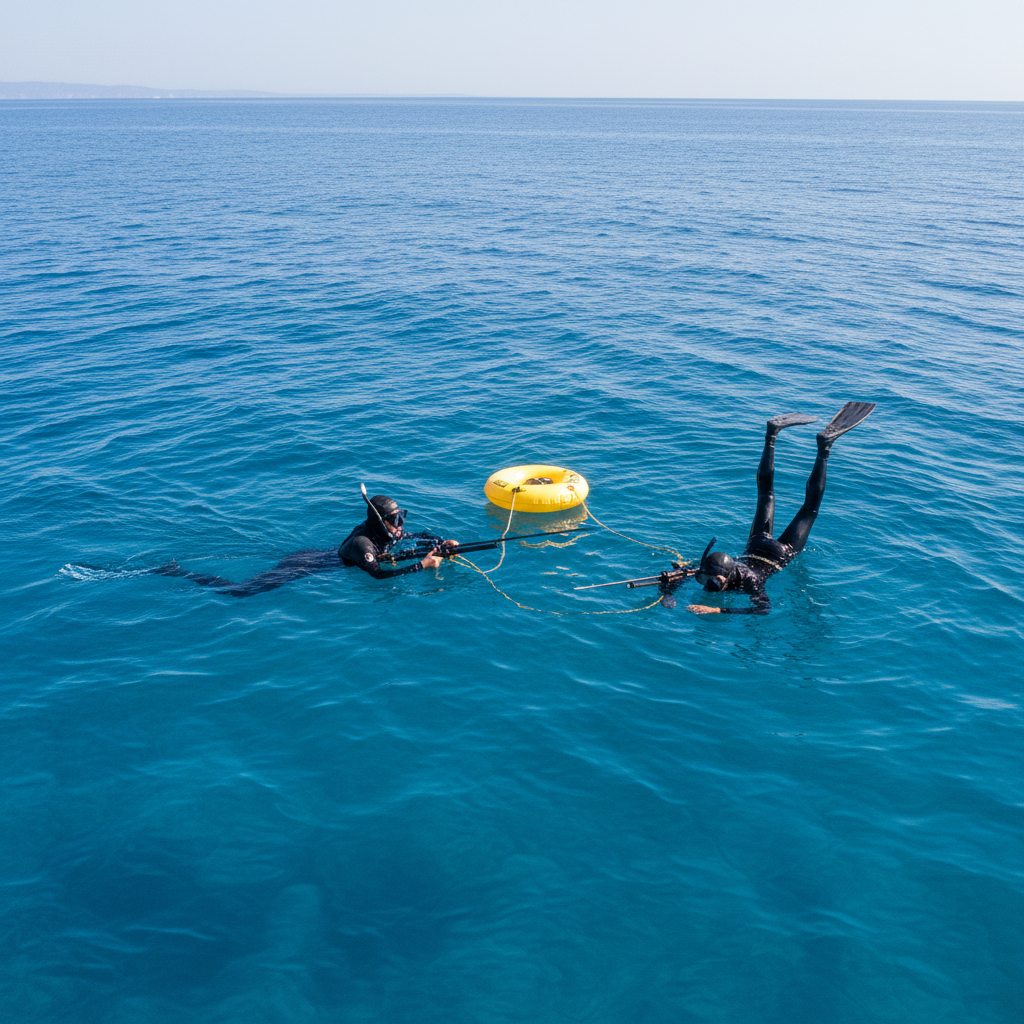
One up, one down
When diving in a pair, one person stays at the surface watching the diver below at all times.
Fly your dive flag
A red-and-white dive flag on a float tells boats there are divers in the water. Required by law in most states.
Speargun safety on until ready to shoot
Always load your speargun in the water and keep the safety on when not actively targeting a fish.
Never spearfish near other people
Maintain a safe distance from swimmers, snorkellers, scuba divers, and kayakers.
Respect the conditions
Start in calm, clear water. Don't push beyond your experience level. If in doubt, don't go out.
Choosing Your First Speargun
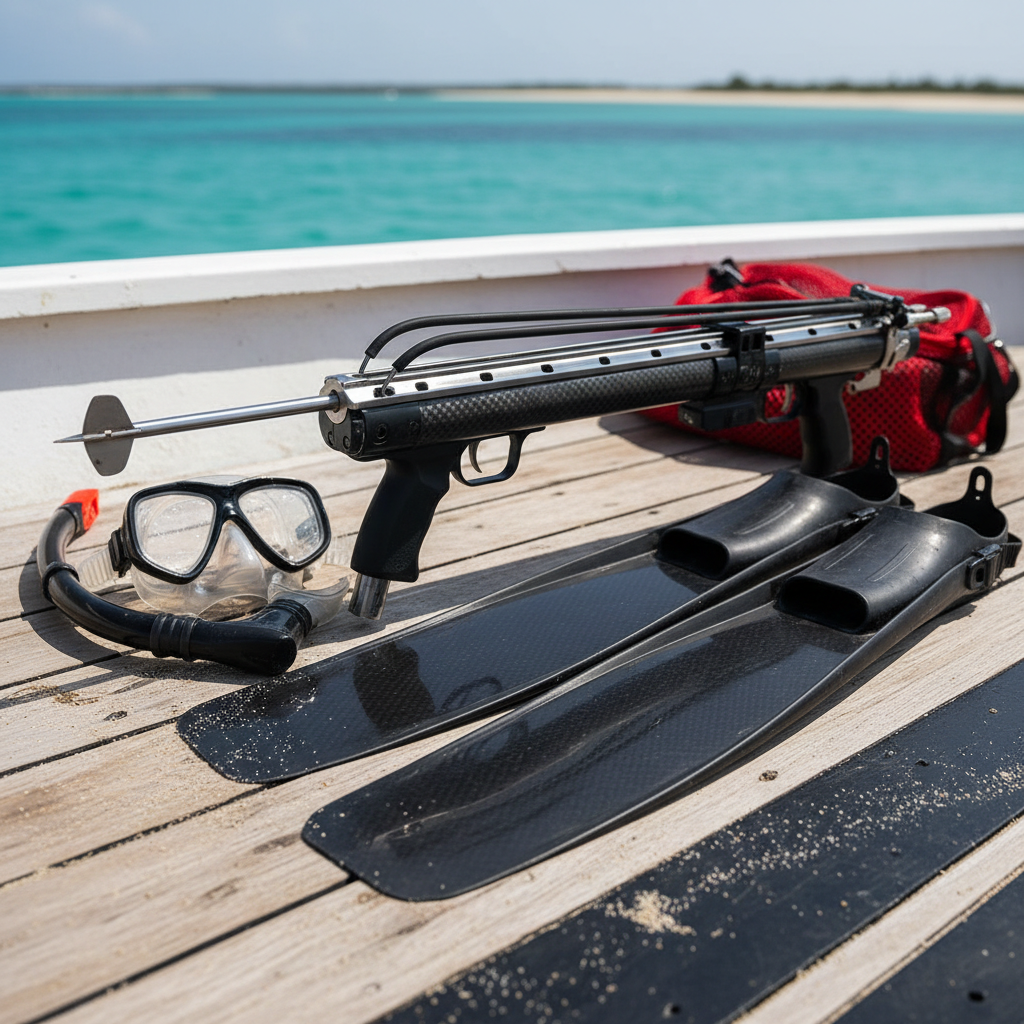
For beginners in shallow reef environments, a 60–80cm band-powered (rubber) speargun is a great starting point. They're affordable, reliable, easy to load, and powerful enough for most reef fish at close range.
Avoid pneumatic (air-powered) guns to start with — they require more maintenance and technique. As you improve and start targeting larger fish or diving deeper, you can upgrade to a longer gun with more bands.
Band-powered spearguns come in two main styles: rail guns (open top, easier to aim) and enclosed track guns (more powerful, suit longer shafts). Most beginners do well with a mid-range rail gun.
Ethical Spearfishing
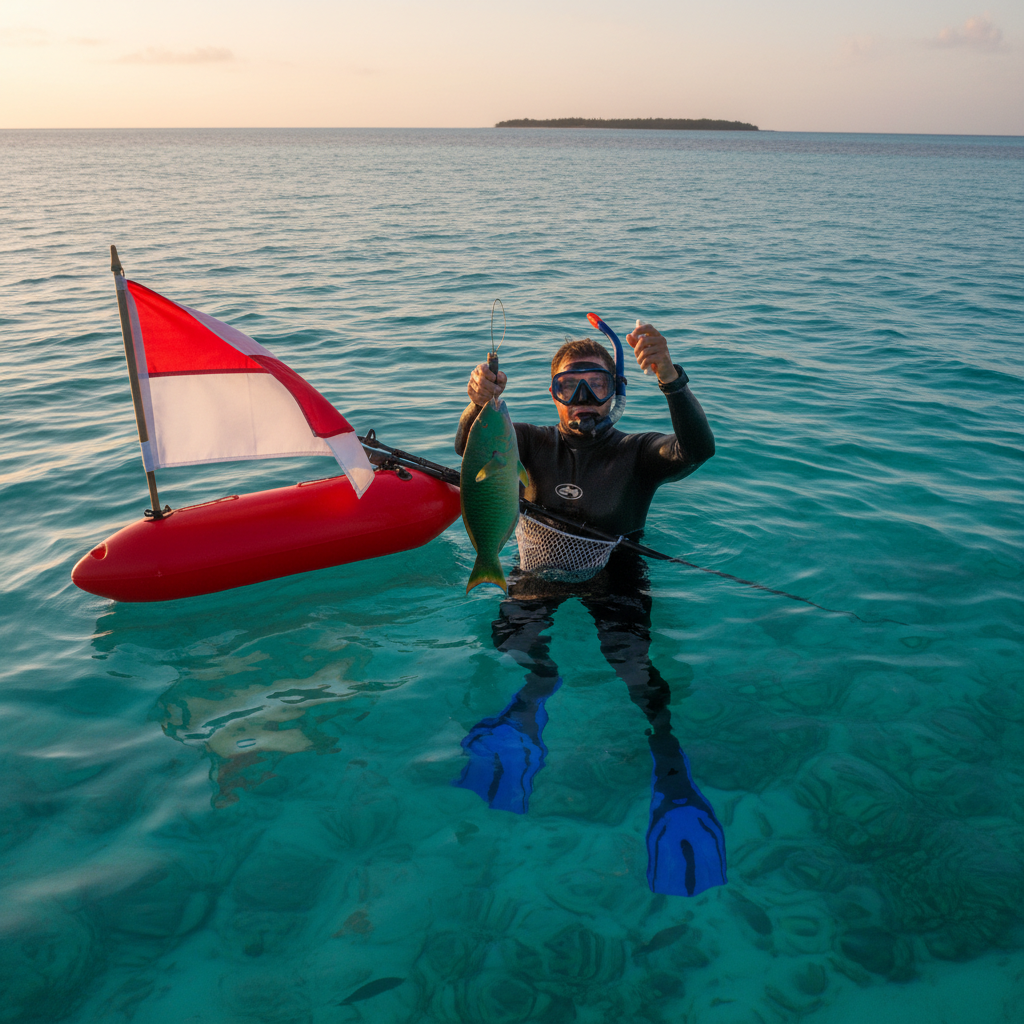
Spearfishing carries a responsibility to the ocean. Because you're actively selecting your catch, you have an obligation to take only what you'll eat, target healthy-sized fish (not juveniles), and release anything you're not sure about.
Key ethical principles to live by:
- ✓Take only what you can eat — not a full bag limit every session
- ✓Release undersized fish carefully — they're the future of the reef
- ✓Avoid spearfishing in spawning aggregations
- ✓Don't shoot fish on cleaning stations or coral bommies where they serve the ecosystem
- ✓Respect no-take zones, marine parks, and seasonal closures
- ✓Pick up any fishing line, nets, or rubbish you find on the reef
Common Beginner Mistakes
Going too deep too soon
Build depth slowly over weeks and months. Most fish are in the top 10 metres.
Hunting alone
Always, always dive with a buddy. No exceptions.
Rushing the shot
Patience is everything. Wait for the fish to present a clean broadside shot.
Overweighting
Too much lead makes you sink fast and tires you out quickly. Get your buoyancy right first.
Ignoring the conditions
Murky water after rain, surgy reefs, or strong currents are not beginner conditions.
Not knowing the rules
Read your state's fishing regulations before every new location you visit.
Ready to gear up?
Check out our full equipment checklist for spearfishing.
Spearfishing Equipment Checklist →Always check your local fishing regulations before spearfishing. Stay safe, dive with a buddy, and respect the ocean.