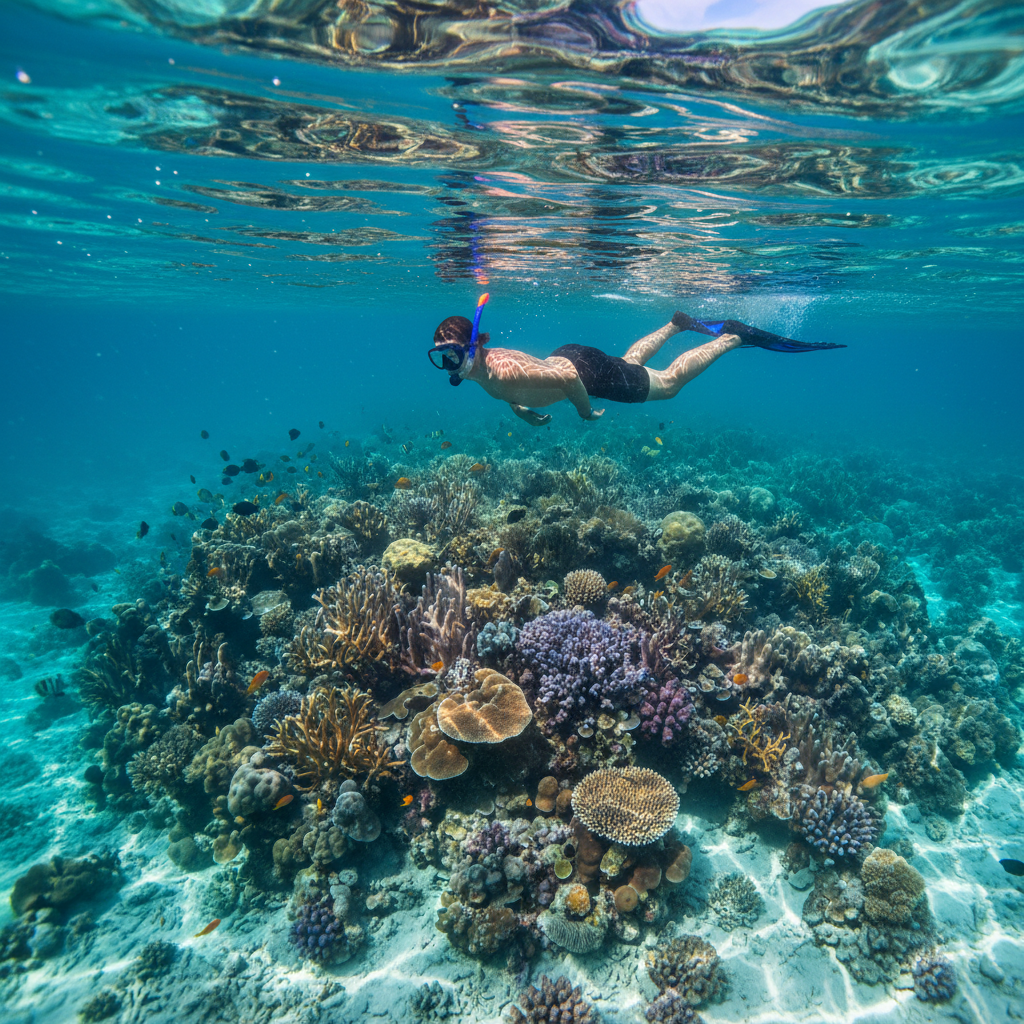
Snorkeller floating over a coral reef in clear tropical water
Beginner's Guide10 min read

Snorkelling for Beginners

Everything you need to know before you enter the water — from picking the right mask to reading ocean conditions and respecting the reef.

Step 1: Getting Started

Choosing the Right Gear
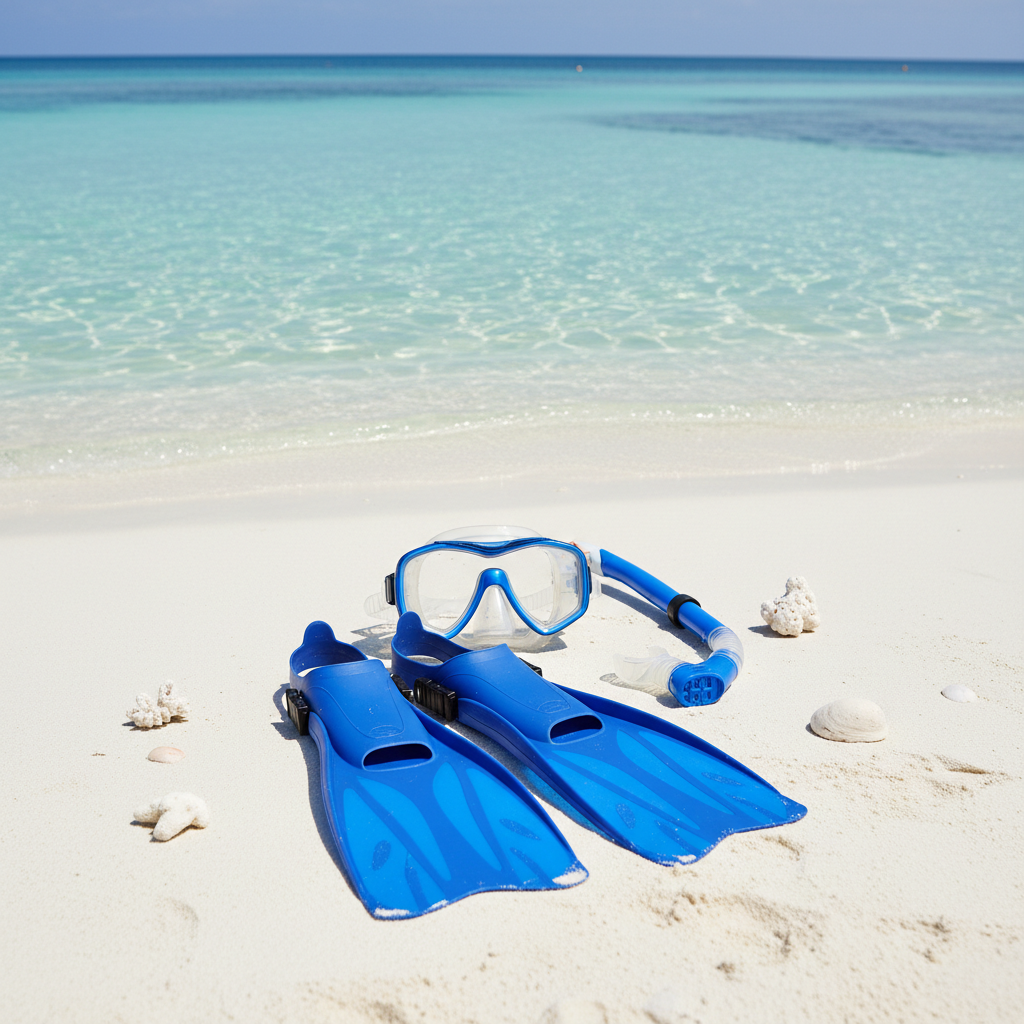
Snorkel mask, snorkel tube and fins laid out on a tropical beach

The gear you start with can make or break your first snorkelling experience. You don't need to spend a fortune — but you do need equipment that fits properly and is suited to your ability level. Three items matter above everything else: your mask, your snorkel, and your fins.

Your mask is the single most important piece of equipment you own. A leaking mask is miserable, and no amount of adjustment will fix a poor fit. Before buying, do the suction test: press the mask gently to your face without using the strap, inhale lightly through your nose, and let go. If it stays sealed for a few seconds, the fit is good. If it drops immediately, move on. Look for a low-volume mask with a soft silicone skirt — it'll seal better and feel more comfortable over time.

For beginners, a dry-top snorkel is the smart choice. It features a valve at the top that seals when submerged, preventing water flooding the tube if a wave rolls over you. It also has a purge valve near the mouthpiece to easily blow out any water that sneaks in. Once you're more confident in the water, you can explore semi-dry and classic open snorkels — but for day one, dry is your friend.

Fins give you propulsion without burning out your arms. Full-foot fins (like slip-on shoes) suit warm-water snorkellers well and don't require thick socks. Open-heel fins with an adjustable strap offer a more customisable fit. Keep fin blade length in mind: shorter, wider blades are more forgiving for beginners, while longer freediving-style blades are powerful but harder to control until you develop your kick technique.

Gear Tip

Always try a mask on before buying — if shopping online, check the return policy so you can test the fit in person first.
Step 2: Before You Dive In

Prepping Your Equipment

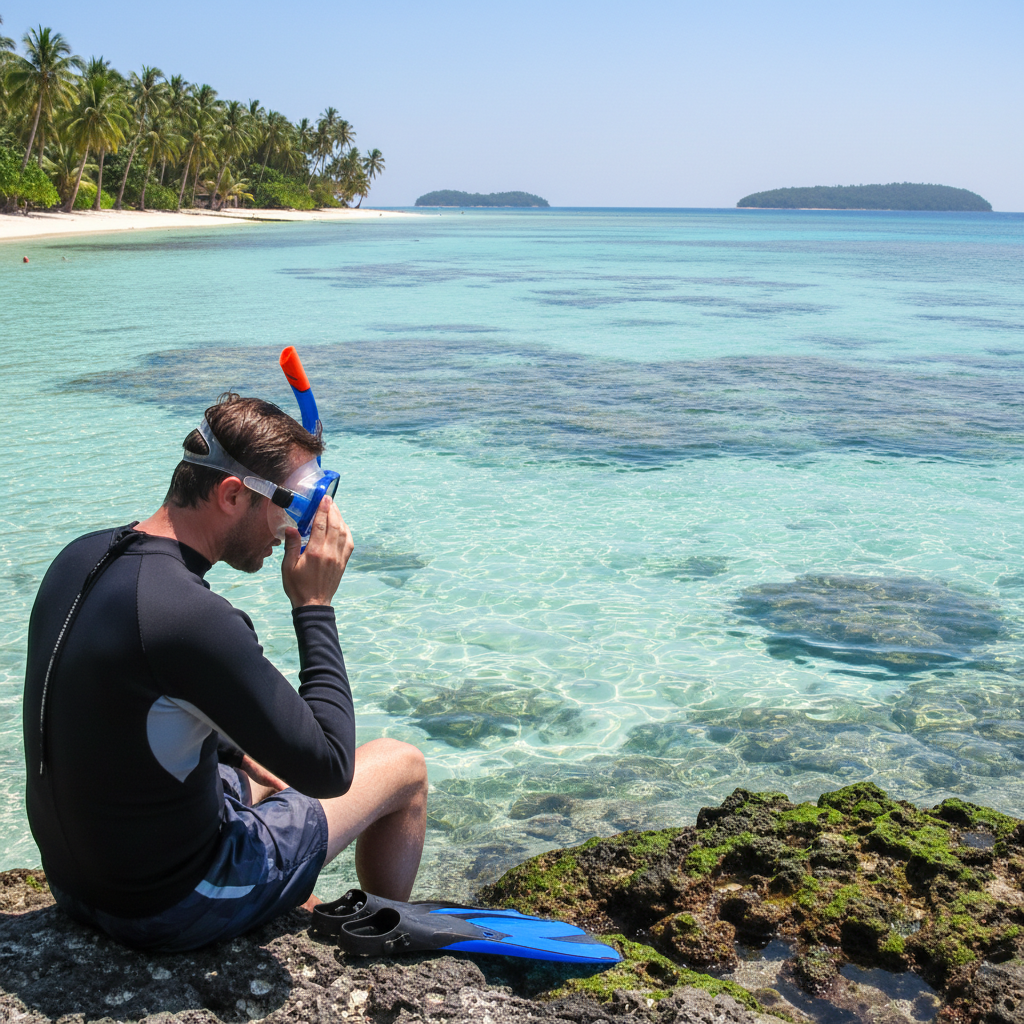
Snorkeller preparing mask and fins at the water's edge before entering the ocean

New masks come straight from a mould, and that manufacturing process leaves a thin residue on the glass that causes persistent fogging. If you skip this step, you'll spend more time clearing your mask than actually looking at anything underwater.

The most effective treatment is a thorough clean with regular dishwashing liquid. Squeeze a generous amount onto the inside of the glass, scrub it firmly with your fingers — including all the silicone around the edges — then rinse. Repeat once or twice. This breaks down the factory residue and gives the anti-fog something to bond to. From that point on, apply a few drops of anti-fog solution (or plain baby shampoo) before every session, spread it around, and give it a quick rinse.

Test all your gear in shallow water before committing to open water. Wade in to knee or waist depth, put everything on, and take a few breaths through the snorkel. Make sure the mask isn't leaking. Check your fins feel secure. Practice blowing a sharp puff through the snorkel to clear any water — you'll thank yourself later when a wave catches you off guard. Once the mask is sealed on your face, try not to remove it unnecessarily; every time you break the seal, you reset the fogging process.

Pro Tip

Baby shampoo diluted in a small bottle works brilliantly as a DIY anti-fog — cheap, reef-safe, and gentle on your eyes.

3 more steps await

Continue reading about water techniques, ocean safety, and marine life etiquette.

Unlock with Premium

$4.99/month · Cancel anytime