Dive Sites in Coral Coast, Western Australia
9 sites · 5–42m · Scuba, Snorkel, Freedive
Diving Coral Coast: what to know
Coral Coast is home to 9 dive sites with depths ranging from 5–42m. The region features wreck, shore, wall dive sites, making it suitable for divers of all experience levels. Popular activities include Scuba, Snorkel, Freedive. Some sites are estuaries where visibility is closely tied to recent rainfall and tidal cycles.
9
Dive Sites
5–42m
Depth Range
3
Site Types
3
Activities
Best months to dive Coral Coast
Coral Coast dive sites
Illustrative image
Key Biscayne Wreck
42m max · Wreck
A 2,695-ton jackup oil rig lost in 1983 while under tow from the Arafura Sea when tow lines snapped — now lying upside down on its legs on a sandy seabed at 42m, 9 miles west of Ledge Point and 12 miles southwest of Lancelin. The shallowest part of the drilling platform at 26m means all diving is below Open Water recreational limits. One of Perth's most spectacular wreck dives, the legs host grey nurse sharks and large demersal fish while the twisted wreckage beneath the platform shelters giant crayfish and wobbegong sharks with growing sponge colonies providing colour each year.
Illustrative image
Chinamans Beach
5m max · Shore
A tidal estuarine beach at the mouth of the Murchison River in the heart of Kalbarri, where Indian Ocean saltwater pushes up the river mouth on each flood tide. A popular family swimming, snorkelling and fishing spot with clear shallow water in calm conditions, tailor, mulloway, dolphins and occasional marine life from the Indian Ocean mixing with the river environment. Facilities include BBQs, shelters, boat ramp and paddleboat hire making this the most accessible water entry point in Kalbarri.
Illustrative image
Blue Holes
5m max · Shore
A Fish Habitat Protection Area just south of Kalbarri on Red Bluff Road where a limestone reef running parallel to the shore creates a series of naturally enclosed pools and sinkholes that act as a sheltered marine aquarium. Over 70 fish species, 11 coral species and 10 sponge types have been surveyed here including spot dart, moon wrasse, raccoon butterflyfish, western rock lobster and banded hair shrimp. While powerful waves crash beyond the limestone reef, the inner pools remain calm — making this one of the safest and most accessible coastal snorkel sites on WA's Coral Coast.
Illustrative image
Horrocks Beach
8m max · Shore
A 2.5km family beach at Horrocks on WA's Coral Coast, sheltered by a large outer reef that forms a protected lagoon with white sandy shores — ideal for swimming, snorkelling and diving. The outer reef breaks Indian Ocean swell while the inner lagoon remains calm, with coral reefs and rock pools accessible on foot at low tide and by snorkel at higher tides. Humpback whales are visible from the shore June–November. A summer pontoon, jetty, boat ramp and BBQ facilities make this one of the best-equipped small-town beach dive destinations on the mid-WA coast.
Illustrative image
Point Moore
12m max · Shore
A limestone reef shore dive off the southern face of Point Moore headland in Geraldton, guided by Batavia Coast Dive Academy — the city's only resident dive shop. The headland's southern face is sheltered from Indian Ocean groundswell by the point itself, exposing a wealth of limestone reefs with caves, crevasses, ledges and overhangs densely populated with western rock lobster (called "cockroaches of the sea" locally for their abundance), reef fish and pelagic species. Best dived in morning calm conditions before Geraldton's famously strong afternoon sea breeze develops.
Illustrative image
Port Denison Outer West Wall
10m max · Wall
The ocean-facing western side of Port Denison harbour's western breakwater — a structured wall dive on one of WA's largest rock lobster harbour's outer breakwall face. The west-northwest-facing wall drops from the surface to approximately 10m on an artificial concrete and rock structure colonised by sponges, encrusting growth and dense western rock lobster populations in one of WA's most productive crayfish harbours. Part of the reef formations north and south of the harbour described by Tourism WA as offering excellent diving conditions.
Illustrative image
Dynamite Bay
6m max · Shore
A naturally sheltered cove at Green Head on WA's Coral Coast, enclosed on three sides by low limestone cliffs that circle the beach and protect it from the strong coastal winds. The still turquoise waters and sandy beach make this an ideal family snorkel site with hard and soft corals and diverse reef fish accessible directly from the shore in calm, clear conditions. A 15-minute walk from Green Head town centre or 2-minute drive.
Illustrative image
Jurien Bay Jetty
6m max · Shore
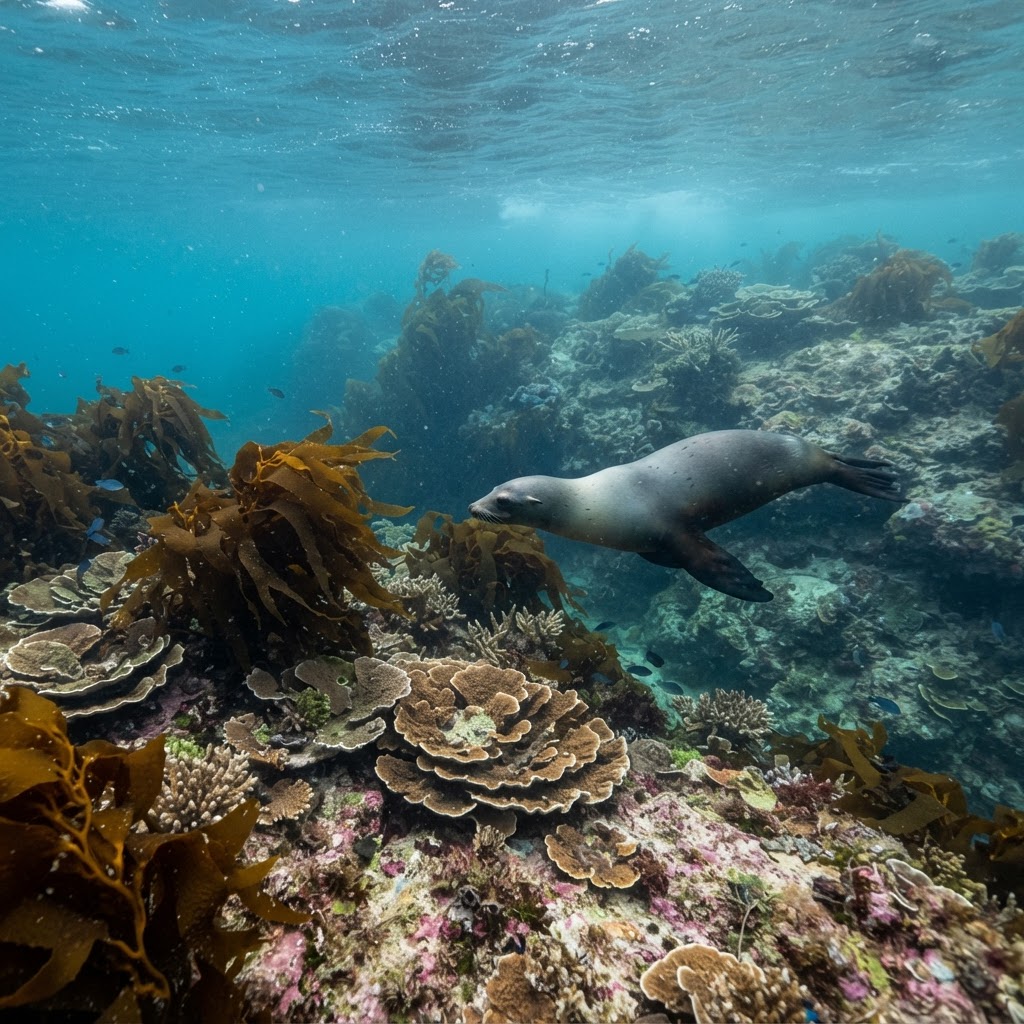
A community-built underwater interpretive snorkel and dive trail at the old jetty site at Dobbyn Park, Jurien Bay Marine Park — WA's only major Australian sea lion breeding area on the west coast. A 120m circuit at 2.5–6m depth features 79 concrete reef balls alongside old jetty pylons, with a natural reef beyond hosting grottos, caves and overhangs covered in coral, anemones and sponges. Seagrass meadows in the inner lagoon provide nursery habitat for western rock lobster and juvenile fish. Swim cards available from local shops for marine life identification.
Illustrative image
Port Denison Outer North Wall
10m max · Wall
The seaward face of Port Denison harbour's northern breakwall — a structured wall dive at the harbour mouth facing north to northeast into the Indian Ocean. Complementary to the Outer West Wall, this face has a different swell exposure profile with less SW groundswell impact but more northerly swell exposure. Part of WA's largest rock lobster harbour, the outer wall face is colonised by sponges, encrusting growth and western rock lobster with pelagic fish action in the harbour entrance channel.
Best Months to Dive Coral Coast
Based on ideal conditions data for all Coral Coast dive sites. Always check the live Divability Score before diving.