Dive Sites in Tasmanian North Coast, Tasmania
10 sites · 10–30m · Scuba, Freedive, Snorkel
Diving Tasmanian North Coast: what to know
Tasmanian North Coast is home to 10 dive sites with depths ranging from 10–30m. The region features shore, reef, wall dive sites, making it suitable for divers of all experience levels. Popular activities include Scuba, Freedive, Snorkel. Some sites are estuaries where visibility is closely tied to recent rainfall and tidal cycles.
10
Dive Sites
10–30m
Depth Range
3
Site Types
3
Activities
Best months to dive Tasmanian North Coast
Tasmanian North Coast dive sites
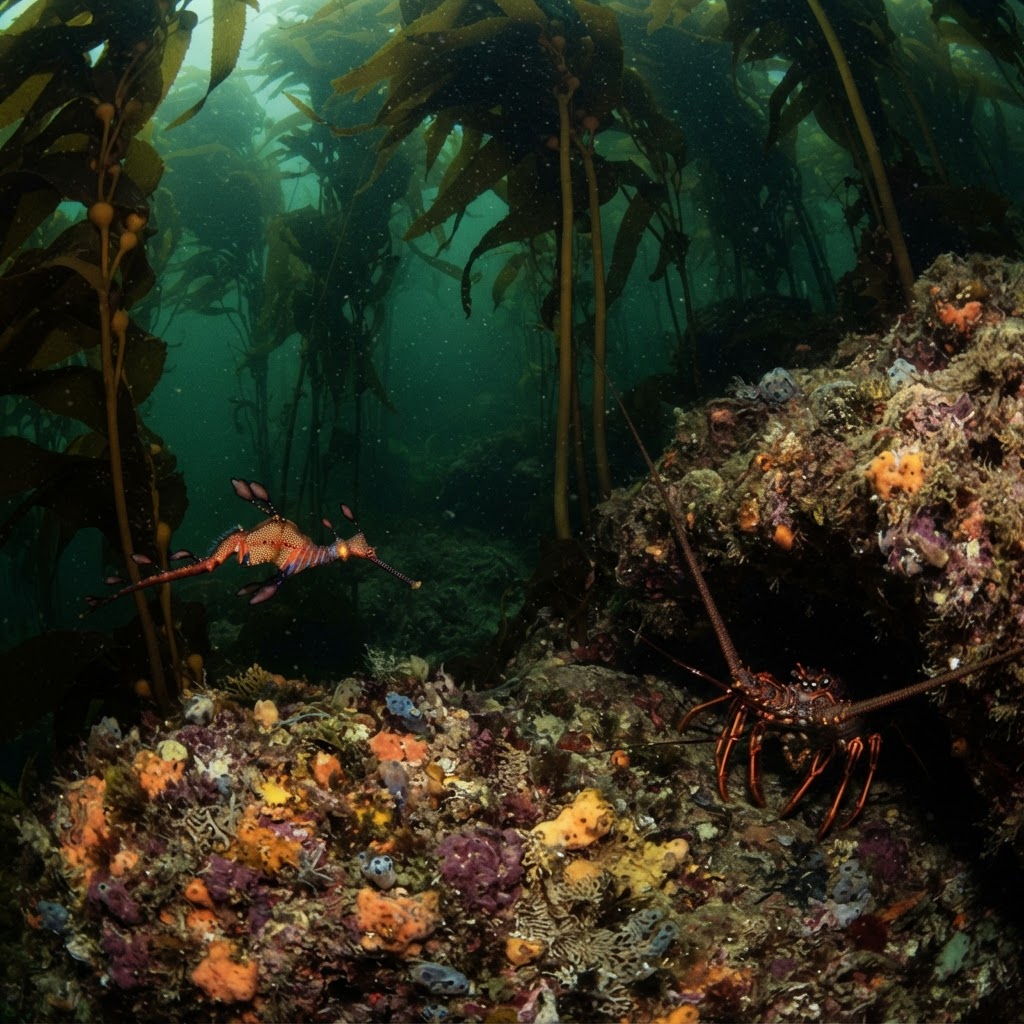
Illustrative image
Stanley Jetty
15m max · Shore
A productive jetty dive in the historic fishing town of Stanley, jutting into Bass Strait on the far northwest Tasmanian coast. The wharf and breakwater pylons attract dense fish populations including the famous annual snotty trevally run (Oct–May), Australian salmon, flathead, gummy sharks and southern calamari. Sheltered in most conditions except easterly — the Stanley peninsula and The Nut basalt plug provide protection from the prevailing westerly Bass Strait weather making this one of the more reliably accessible northwest coast dive sites.
Illustrative image
Razor Beach
12m max · Shore
A shore dive and snorkel site within Rocky Cape National Park on the eastern flank of Rocky Cape, one of the most prominent headlands on the northwest Tasmanian coast. The eastern shore of Rocky Cape is explicitly described by Marine Life Network as often the only sheltered diving on the coast when westerly conditions prevail. Shallow quartzite reef with wrasse, abalone and kelp forest typical of the Rocky Cape reef system, accessed via the national park road and concrete boat ramp near the toilet block.
Illustrative image
Sisters Island
25m max · Reef
Rated by Marine Life Network as one of the best scenic dives on the north Tasmanian coast, Sisters Island sits within Rocky Cape National Park and offers diverse dive aspects — the sheltered western quartzite reef bay, the dramatic Magic Castle bommie (rising 45° from 25m to 10m), rocky spires off Shag Rock to the east, and The Jewel bommie group on the NE side. One of the most numerous nudibranch populations on the northwest coast alongside rare fish species documented by Reef Life Survey.Rated by Marine Life Network as one of the best scenic dives on the north Tasmanian coast, Sisters Island sits within Rocky Cape National Park and offers diverse dive aspects — the sheltered western quartzite reef bay, the dramatic Magic Castle bommie (rising 45° from 25m to 10m), rocky spires off Shag Rock to the east, and The Jewel bommie group on the NE side. One of the most numerous nudibranch populations on the northwest coast alongside rare fish species documented by Reef Life Survey.
Illustrative image
Table Cape
15m max · Wall
A shore and boat dive at the base of Table Cape — an extinct volcano whose northern and eastern faces plunge 170m steeply from the cliff top to Bass Strait. Narrow volcanic reef hugs the cliff base with colourful encrusting marine life, kelp forest and sponge growth typical of the northwest Tasmanian coast. The dramatic basalt cliff scenery continues underwater making this a visually distinctive dive, though it is weather-dependent and accessible only in genuinely calm southerly conditions.
Illustrative image
Blackman Reef
15m max · Reef
A flat dome of rock spread over the area of a large football field beneath and adjacent to the Burnie wharf, rated by Marine Life Network as one of the better dive spots on the northwest coast. The reef functions as the natural breakwater for Burnie port and the western side — well away from the shipping channel — provides a moderately safe and accessible dive with crayfish in rock wall dens, sponge gardens and pelagic fish action. Entry from the West Beach Reserve car park.
Illustrative image
Pipeline
18m max · Shore
A shore dive site at Boat Harbour on Tasmania's northwest coast, on the quartzite reef system between Wynyard and Rocky Cape National Park — described by Marine Life Network as packed with fish and hosting some of the best invertebrate life in Tasmania. The name "Pipeline" likely refers to a submerged pipe or drainage structure used as a navigation reference, similar to named pipeline sites elsewhere in Australia. Accessible from the beach in the sheltered bay between two rocky headlands.
Illustrative image
Three Sisters
25m max · Reef
Three steep-sided granite islands 500m off the northwest Tasmanian coast between Penguin and Ulverstone in Bass Strait, forming part of the Three Sisters–Goat Island Nature Reserve. Australian fur seals haul out on the lowest island and black-faced cormorants breed in significant numbers. The surrounding Bass Strait waters support productive pelagic ecosystems — kelp-covered granite walls, sponge gardens and pelagic fish action typical of productive northwest Tasmanian Bass Strait islands. Boat dive only with no dedicated commercial operator currently documented.
Illustrative image
Kelso Jetty
30m max · Shore
An easy, accessible shore dive from the Kelso boat ramp and jetty on the western bank of the lower Tamar River, directly opposite Low Head. Described by PADI as offering an abundance of seahorses, soft sponges and diverse Tamar River marine life with easy entry suitable for Open Water divers, deepening to 30m for Advanced divers along the channel edge. Part of the broader George Town/Tamar River dive precinct also including The Avon wreck and The Monument sponge gardens.
Illustrative image
Low Head Breakwater
10m max · Shore
A shore dive and snorkel site on the western side of Low Head at the mouth of the Tamar River, accessible from the breakwater adjacent to Australia's oldest continuously operating pilot station. Shallow flat rock terrace reef in 2–6m with bull kelp, brief Macrocystis giant kelp growths and abalone, drifting along the western headland in the strong Tamar River tidal current. Best for confident snorkellers and intermediate divers comfortable with current drift diving.
Illustrative image
Tenth Island
25m max · Reef
A tiny 900m² uninhabited granite islet in Bass Strait off George Town, home to one of Tasmania's most significant Australian fur seal breeding colonies with up to 400 pups born annually. Described by visiting divers as producing some of the best diving in Tasmania — the fur seals' genuine curiosity and playful interaction with divers through kelp forest and granite reef creates an encounter found nowhere else on the island. Access from George Town boat ramp in suitable Bass Strait conditions.
Best Months to Dive Tasmanian North Coast
Based on ideal conditions data for all Tasmanian North Coast dive sites. Always check the live Divability Score before diving.