Green Island JettyDive Conditions — Central Great Barrier Reef, QLD

VisPro Premium
Current Visibility
Updated 02:26 AM
Planning guide — always check conditions on site.
Visibility Potential
12-15m
Good
Clear-water max 15m
Divability Score
Was our forecast accurate last time you dived here?
A quick Yes matters just as much as a No — telling us when we got it right is how we prove and improve accuracy. Takes 10 seconds.
Divability Score Forecast
Visibility Range Forecast
Air Temp
Outside right now
Water Temp
Rashguard or 1–2mm springsuit
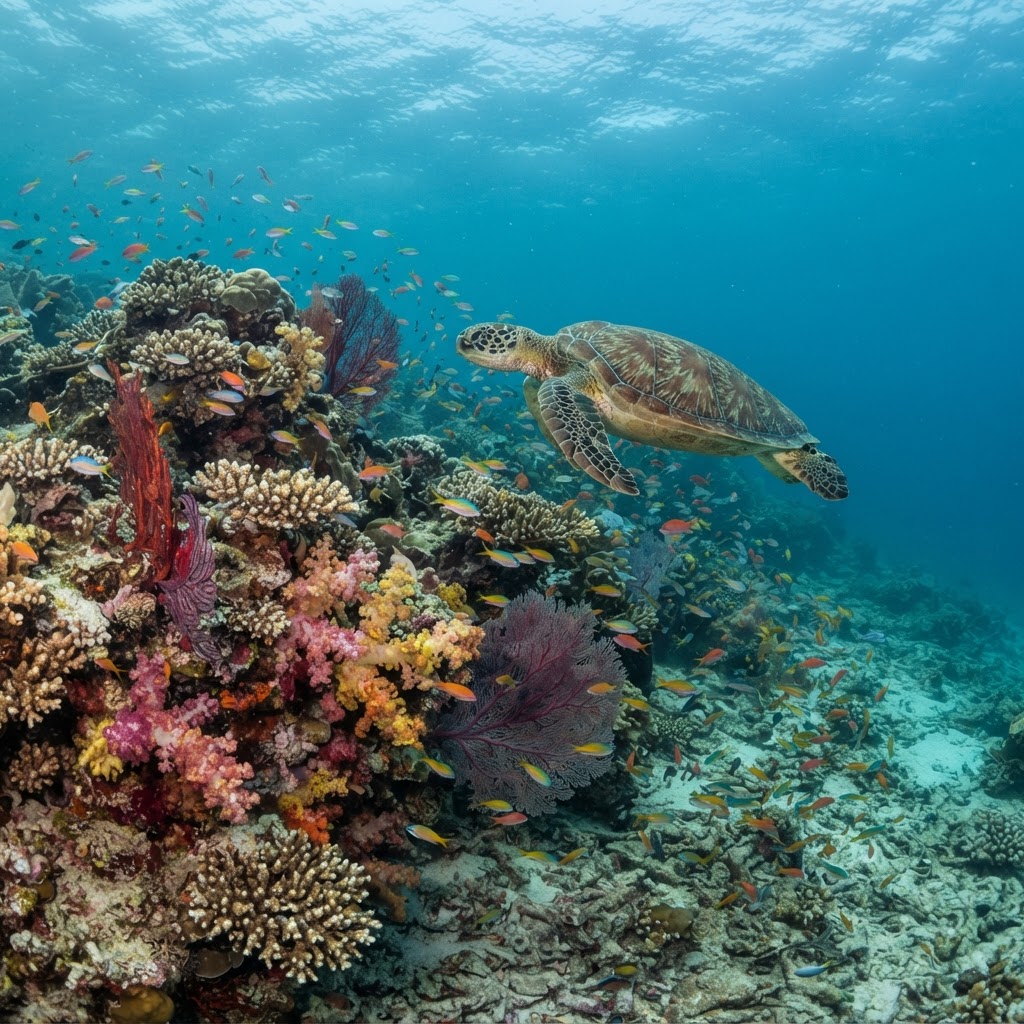
A sheltered jetty snorkel and dive site on the leeward side of Green Island coral cay, 27km offshore from Cairns. Calm conditions, resident giant cowtail stingrays and an exceptionally reliable turtle encounter rate make this one of the most popular accessible sites on the island, with coral gardens extending to 15m for certified divers on the southern side, away from the boat mooring channel.
Site Type
Enclosed
Depth
1–15m
Current
Light
Ability
Beginner
Suited to
Scuba, Freedive, Snorkel
Region
Central Great Barrier Reef, QLD
Min. cert (scuba)
Open Water
Reef Layout
Coral gardens and sea grass beds extending from the jetty pylons out to 15m on the southern side, away from the boat mooring and arrival channel. Schools of fish linger between the pylons in the shallows, with isolated bommies and coral patches providing structure for reef fish and resident invertebrates throughout the lagoon.
Marine life
- Cowtail stingrays
- Yellow sweetlips
- Mullet
- Batfish
- Green turtles
- Octopus
- Stingrays
- Reef sharks
Hazards
- Vessel Traffic
- Stinger Season
What is the visibility at Green Island Jetty?
Typical visibility at Green Island Jetty is around 6m, best on calm days after a settled dry spell. VisPro Dive publishes a live visibility forecast for Green Island Jetty each day. VisPro Dive gives every site a daily Divability Score out of 100 and a visibility estimate.
When is the best time to dive Green Island Jetty?
The best time to dive Green Island Jetty is during calm weather with light winds and low swell — light south-easterly trade wind, swell under 0.5m, mid to high tide. The jetty sits on the leeward side of the island, so it remains calm even when the prevailing SE trades are blowing — one of the more weather-resilient sites on Green Island. Diveable year-round. Check the VisPro Dive divability score for Green Island Jetty to find the clearest window over the next 7 days.
How do I get to Green Island Jetty?
Green Island Jetty is located on the Central Great Barrier Reef coast in Queensland, Australia (approximately -16.758, 145.971). Open the site page on VisPro Dive and tap "Directions" for turn-by-turn directions to the dive site.
What marine life can I see at Green Island Jetty?
Divers at Green Island Jetty commonly encounter cowtail stingrays, Yellow sweetlips, Mullet, Batfish, Green turtles, Octopus, Stingrays, Reef sharks, Lionfish, Moray eels and Nudibranchs. Marine life sightings vary with the season, water temperature and conditions on the day.
Is Green Island Jetty suitable for beginner divers?
Yes. Green Island Jetty is generally suitable for beginner divers with an Open Water certification. Always dive within the limits of your training and certification, dive with a buddy, and check the live conditions before you get in.
Community Reports
Marine Life
Turtles and Bat fish
Notes
Super choppy surface
Reported by AngieSelkirk12Veteran
Nearby dive sites
Green Island North Beach
Central Great Barrier Reef · 0.4 km away
Welcome Bay (Fitzroy Island)
Central Great Barrier Reef · 19 km away
Thetford Reef (Blue Lagoon)
Central Great Barrier Reef · 23 km away
Sunlovers Pontoon (Moore Reef)
Central Great Barrier Reef · 28 km away
Reef Magic Pontoon (Moore Reef)
Central Great Barrier Reef · 29 km away
Great Adventures Reef Pontoon (Moore Reef)
Central Great Barrier Reef · 30 km away
Safety Notice
VisPro forecasts are a planning tool built from live ocean, weather and community data. Conditions on the day can change quickly, so always check the water on site before you go in, dive within your training and experience, and follow local advice. Scores help you plan — they're not a safety check.