The Science of Murky Water: Why Runoff Matters for Shark Awareness
22 April 2026scientific
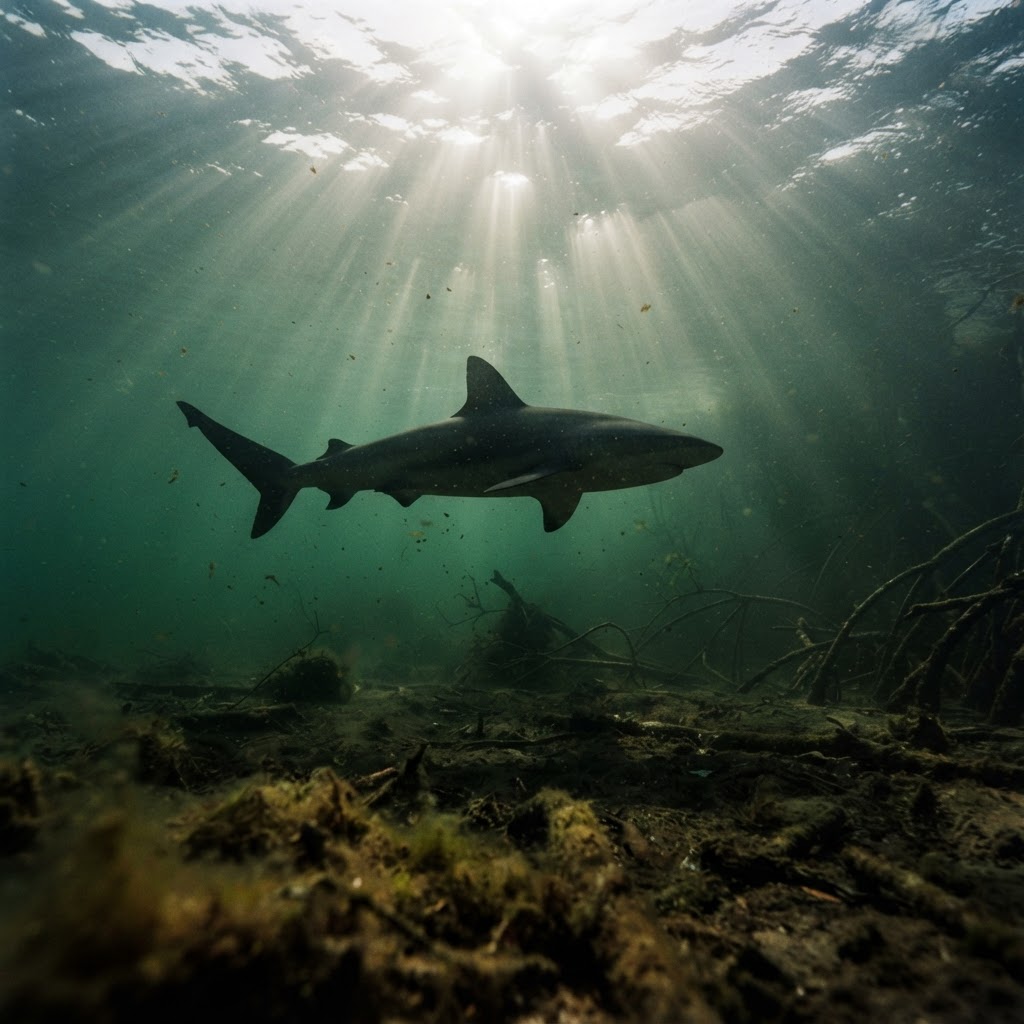
Explore how terrestrial runoff affects ocean visibility, impacting marine ecosystems and shark behaviour. Understand the scientific mechanisms behind turbidity and learn how VisPro Dive's real-time map enhances diver safety.
The Mechanics of Runoff and Turbidity
Terrestrial runoff, the flow of water over land surfaces, serves as a primary vector for the transport of sediments, dissolved organic matter, nutrients, and pollutants into coastal marine environments. This process is exacerbated by heavy rainfall, urban development, agricultural practices, and deforestation, all of which disrupt natural drainage patterns and increase the mobilisation of particulate matter. Upon entering the ocean, these suspended particles scatter and absorb incident light, thereby reducing water clarity—a phenomenon known as turbidity. The intensity and composition of runoff significantly influence the degree of turbidity, with fine silts and clays remaining suspended for extended periods, particularly in calmer coastal waters. Nutrient loading, predominantly nitrogen and phosphorus from agricultural fertilisers and wastewater, triggers phytoplankton blooms. These microscopic algae, while vital to the marine food web, can proliferate excessively, further diminishing light penetration and visual range.
Ecological Impact: From Plankton Blooms to Predator Behaviour
The ecological ramifications of increased turbidity are multifaceted. Reduced light penetration inhibits photosynthesis by benthic flora, such as seagrasses and corals, crucial habitats for countless marine species. The subsequent breakdown of organic matter from algal blooms can lead to hypoxic or anoxic conditions, creating 'dead zones' detrimental to marine life. From a predator-prey dynamic, decreased water clarity can significantly alter the behaviour of apex predators, including sharks. Many shark species possess highly developed sensory systems, including electroreception (Ampullae of Lorenzini), olfaction, and lateral line sensitivity, which allow them to detect prey irrespective of visual cues. In low-visibility environments, sharks may rely more heavily on these non-visual senses, potentially increasing their hunting efficiency in conditions where their prey, or indeed human divers, are visually impaired. This shift in sensory reliance, combined with the potential for prey disorientation in turbid waters, can elevate the risk profile for divers, as the traditional visual cues for avoiding encounters are compromised.
The VisPro Dive Solution: Real-time Visibility Mapping
Understanding and predicting areas of reduced visibility due to runoff is paramount for diver safety. VisPro Dive addresses this critical need through its advanced **real-time visibility map**. This innovative tool integrates meteorological data, oceanographic models, and user-generated reports to provide an accurate, up-to-the-minute assessment of underwater conditions. By leveraging satellite imagery for turbidity detection, coupled with predictive modelling for runoff events, VisPro Dive empowers divers to make informed decisions before entering the water. Our map provides crucial data points on expected water clarity, allowing divers, freedivers, spearfishers, and snorkellers to identify and avoid areas where runoff has significantly compromised visibility. This proactive approach not only enhances safety but also optimises dive planning, ensuring a more rewarding and secure experience.
Mitigation and Awareness for Diver Safety
Beyond utilising technological solutions, a broader understanding and mitigation of runoff's causes are essential. Divers can contribute to this by supporting sustainable land management practices, advocating for improved urban stormwater management, and reducing their own environmental footprint. For immediate safety, it is imperative for all water users to exercise extreme caution in turbid waters, particularly after significant rainfall events, especially in known shark habitats. Always dive with a buddy, maintain awareness of your surroundings, and adhere to local advisories. The VisPro Dive real-time visibility map serves as an indispensable first line of defence, offering actionable intelligence to minimise encounters in conditions that favour predators. By combining scientific understanding with advanced technological tools, the diving community can collectively enhance safety and promote responsible marine stewardship.
Conclusion
The interconnectedness of terrestrial and marine ecosystems underscores the profound impact of land-based activities on the underwater world. Runoff-induced turbidity is not merely an aesthetic concern; it is a scientifically verifiable environmental alteration with significant ecological consequences, including altered predator-prey dynamics that directly bear on diver safety. VisPro Dive is committed to fostering a community of informed and responsible divers. By providing cutting-edge tools like our real-time visibility map, we aim to equip every water enthusiast with the knowledge and resources necessary to navigate the complexities of our oceans safely and sustainably. Let's champion clarity, both in our waters and in our understanding of them.