The Living Labyrinth: What Every Diver Needs to Know About Coral Reef Ecology
29 April 2026educational
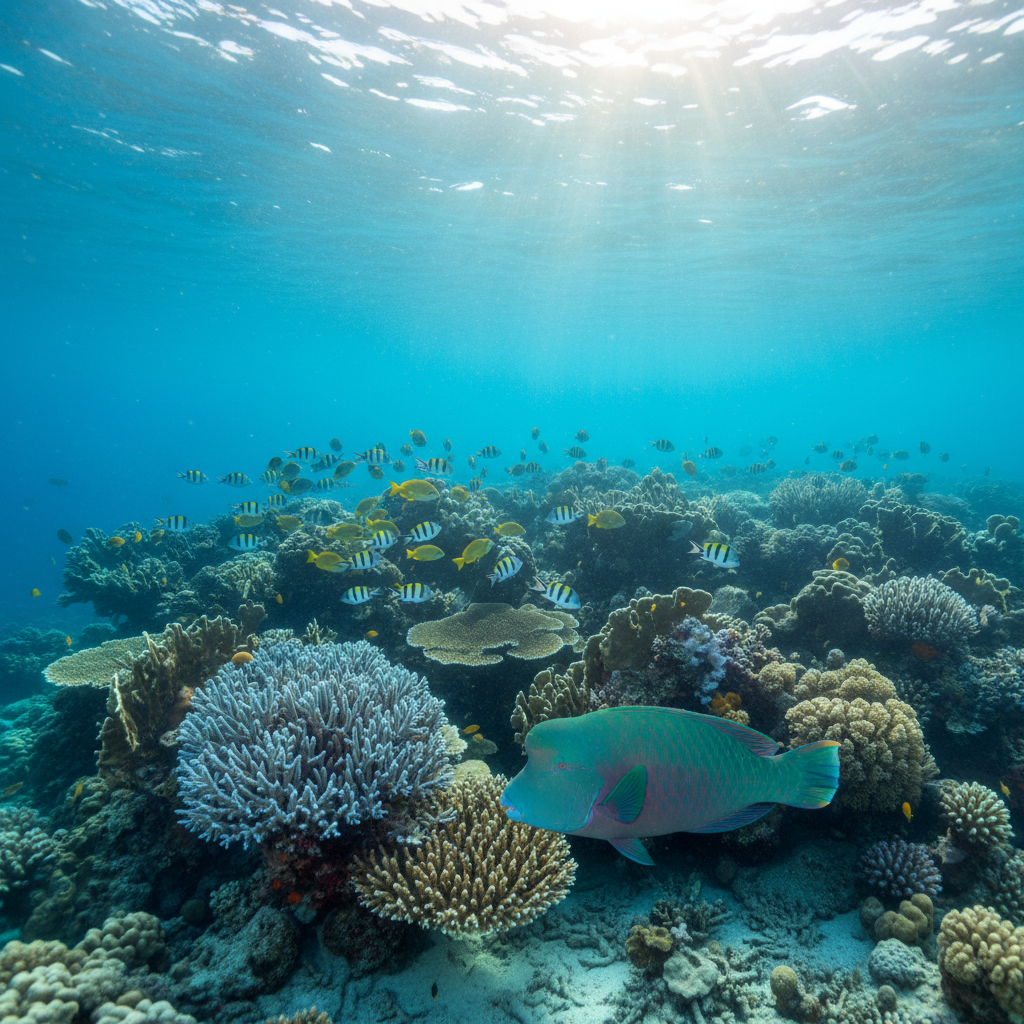
Coral reefs cover less than 1% of the ocean floor yet shelter nearly a quarter of all marine species — and understanding how they work will transform every dive you make. From the symbiotic algae powering each polyp to the predator-prey chains that keep the whole system humming, here's your field guide to the reef's hidden logic.
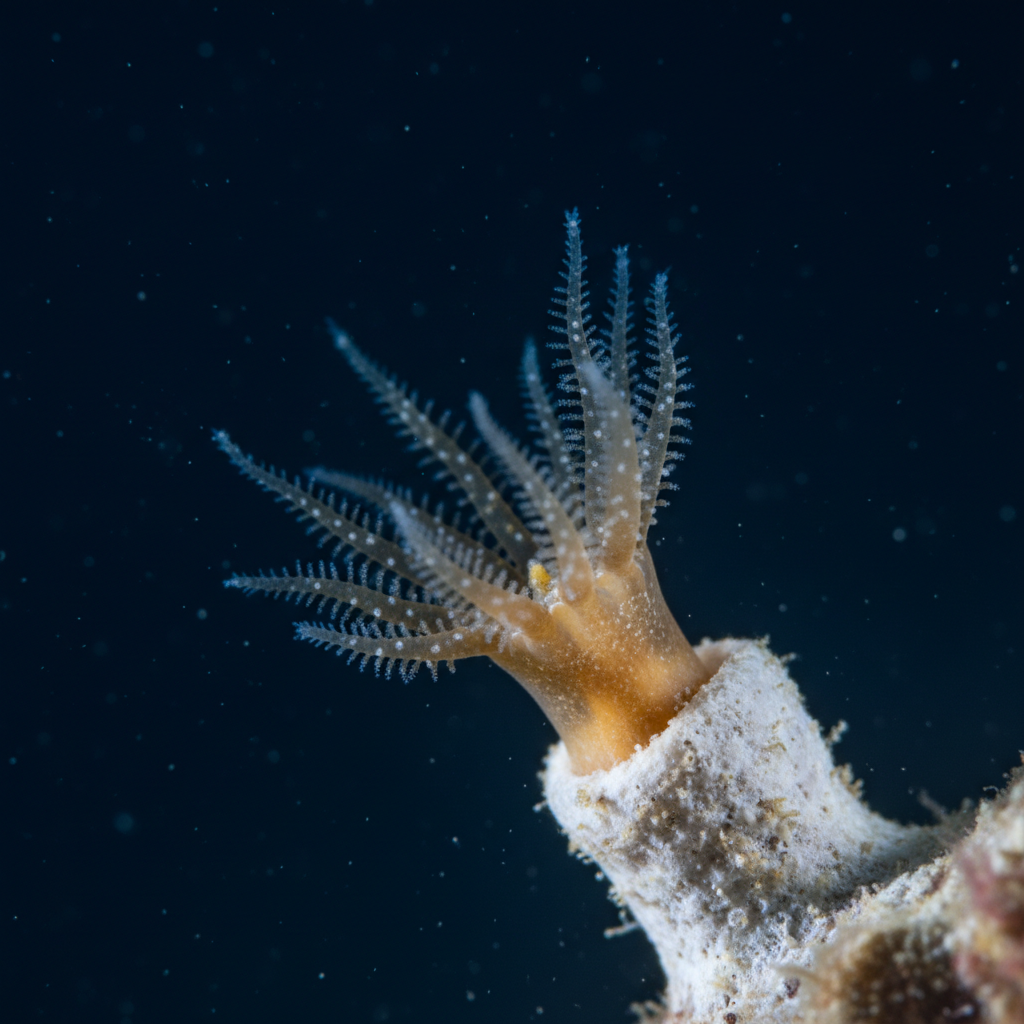
Coral Is an Animal — And It's Running a Farm
Most beginner divers are surprised to learn that the reef structure beneath their fins is built by animals, not plants. Coral polyps are tiny, soft-bodied invertebrates related to jellyfish and sea anemones. Each one secretes a hard calcium carbonate skeleton, and over centuries — sometimes millennia — their stacked colonies form the towering structures we dive through today. The Great Barrier Reef, the world's largest coral reef system stretching over 2,300 kilometres off Queensland's coast, has been building for roughly 20,000 years.
What makes corals genuinely remarkable is the metabolic deal they've struck with a microscopic algae called zooxanthellae (Symbiodiniaceae). These single-celled photosynthetic organisms live within the coral's tissue and, in exchange for shelter and access to the polyp's metabolic waste products (carbon dioxide and nitrogen), they produce up to 90% of the coral's energy needs via photosynthesis. This is why shallow, sunlit reef zones are the most productive — light is the engine. As a diver descending to 15–20 metres, you're literally crossing energy gradients; coral morphology shifts from broad, plate-like forms that maximise light capture in deeper, dimmer water to robust, branching structures in shallower, wave-swept zones.
Understanding this light dependency has real implications for how you plan your dives. Morning dives on the reef's eastern face — when sunlight penetrates at its most direct angle — are not just visually stunning; they're when zooxanthellae are at peak photosynthetic activity, and the reef feels almost electric with life.
The Trophic Web: Who's Eating Whom (and Why It Matters)
A coral reef's staggering biodiversity isn't random — it's the product of millions of years of co-evolution between species that eat, clean, compete with, and depend upon each other. At the base of the food web sit primary producers: zooxanthellae, filamentous algae, and phytoplankton. Herbivores like parrotfish, surgeonfish, and sea urchins graze this plant matter, keeping algae from smothering coral. This grazing pressure is so critical that when sea urchin populations on Caribbean reefs collapsed due to disease in 1983, algae blooms choked reefs within months.
Parrotfish deserve a special mention because they're often misunderstood by new divers. Those crunching sounds you hear on the reef? That's a parrotfish biting off chunks of dead coral skeleton to access algae, then grinding it in their gut and excreting it as fine white sand. A single large parrotfish can produce up to 90 kilograms of sand per year. Many of Australia's iconic white sand beaches owe their existence, at least in part, to parrotfish digestion.
Higher up the trophic ladder, reef sharks — predominantly whitetip, blacktip, and grey reef sharks in Indo-Pacific waters — act as apex regulators. Their presence controls mid-level predator populations, which in turn protects herbivore numbers and, downstream, the coral itself. This is called a trophic cascade, and it's why shark-protected marine parks like those around the Coral Sea tend to have dramatically healthier reef structures than unprotected zones. When you spot a reef shark on your next dive, that's not just a thrill — it's a health indicator.
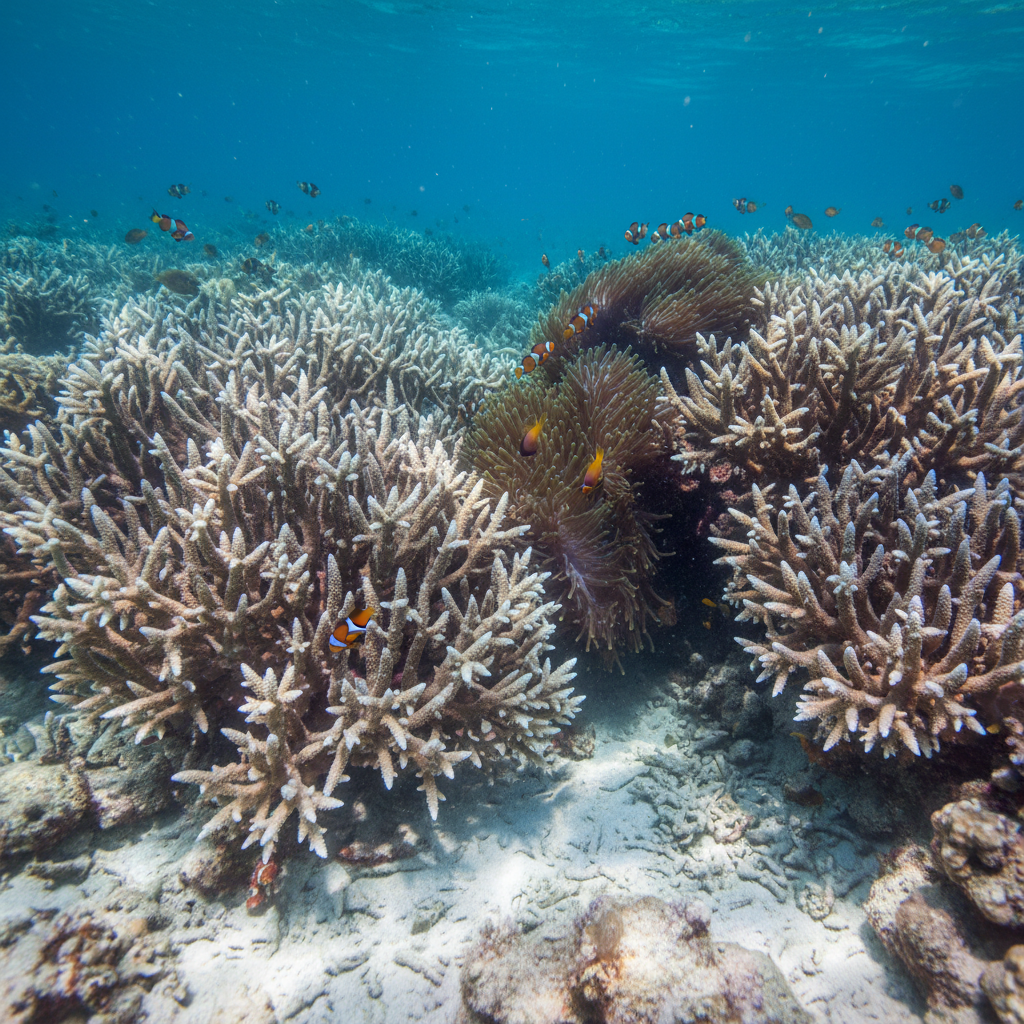
Bleaching, Resilience, and the Temperature Tipping Point
Coral bleaching is one of the most discussed — and most misunderstood — phenomena in marine science. When water temperatures rise even 1–2°C above the long-term seasonal maximum for as little as four weeks, the thermal stress causes coral polyps to expel their zooxanthellae. Without their algal partners, corals lose up to 90% of their energy supply and turn stark white — bleached. They're not dead yet, but they're starving.
The Great Barrier Reef has now experienced five mass bleaching events in recorded history, with the 2022 and 2024 events being particularly severe. The 2024 bleaching, documented extensively by the Australian Institute of Marine Science (AIMS), was the first to occur during a La Niña period — historically a cooler phase — signalling that baseline ocean temperatures have shifted enough that even La Niña no longer provides reliable thermal refuge. As a diver operating in Australian waters, you may encounter bleached sections on any given dive, particularly in shallower zones above 10 metres where heat accumulates most.
Crucially, bleaching is not always fatal. If temperatures drop within a few weeks, zooxanthellae can re-colonise and corals can recover — a process that's been documented extensively at Ningaloo Reef and in parts of the Coral Sea. Coral resilience depends on factors including the species (massive Porites corals are generally more thermally tolerant than branching Acropora), local water flow, and whether the coral has experienced prior sub-lethal bleaching events that may have selected for more heat-tolerant symbiont strains. As a diver, reporting bleaching events through citizen science platforms like CoralWatch — developed by the University of Queensland — contributes real data to reef monitoring programmes.
Reef Zones: Reading the Structure of Your Dive Site
Experienced divers don't just look at the reef — they read it. A coral reef is divided into distinct ecological zones, each shaped by light, wave energy, water movement, and depth. The reef flat is the shallow, often exposed platform behind the crest where water can be just centimetres deep at low tide; it's dominated by tough, encrusting corals and sea grasses. The reef crest — the shallowest point of the outer reef, often wave-battered — is where you'll find the most structurally complex corals adapted to high energy environments.
Below the crest lies the fore reef, the sloping seaward face that most recreational divers spend the majority of their time exploring. This zone grades from the upper reef slope (3–15 metres), packed with fast-growing branching corals like Acropora and Pocillopora, to the mid slope (15–30 metres), where coral cover gives way to more plate and foliose forms, and eventually to the deeper lower slope where soft corals, sea fans, and encrusting sponges dominate. Understanding these zones helps you predict which species you'll encounter and at what depth — trumpetfish hover near staghorn thickets in the shallows, while batfish school in the mid-water column of the fore reef slope, and bumphead parrotfish graze the upper reef crest at dawn.
For freedivers and snorkellers, the reef flat and upper crest are often the most accessible and, in healthy systems, the most visually spectacular — early morning light on a shallow reef flat, with the tide pushing clear water across the table coral gardens, is one of the defining experiences of diving in Australia.
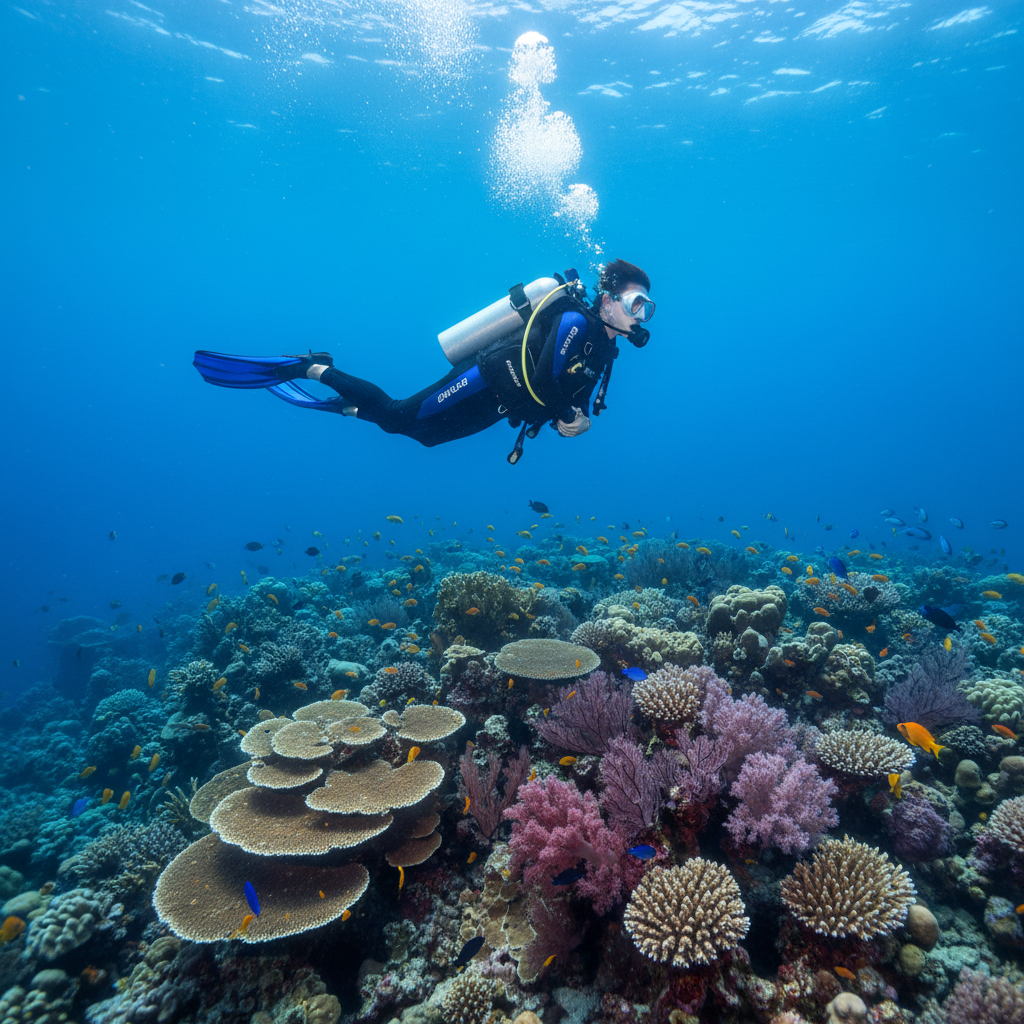
Diving the Reef Responsibly: Ecology in Practice
Understanding reef ecology isn't just intellectually satisfying — it should change how you behave underwater. Buoyancy control is, without exaggeration, the single most important ecological skill a diver can develop. A single careless fin kick on a branching Acropora colony can destroy decades of coral growth, and repeated physical damage across a popular dive site adds up to significant habitat loss. The PADI Peak Performance Buoyancy specialty and RAID's equivalent exist precisely to train divers to hover neutrally and move deliberately. If you're a snorkeller in shallow water, the same principle applies — avoid standing on coral, even what looks like dead rock, which is often live or recovering substrate.
Chemical sunscreen is another genuine concern. Oxybenzone and octinoxate, common UV filters in conventional sunscreens, have been shown in peer-reviewed studies to induce coral bleaching responses, disrupt coral reproduction, and cause developmental abnormalities in coral larvae at concentrations as low as 62 parts per trillion. Hawaii and Palau have legislated bans on these compounds, and reef-safe mineral sunscreens using zinc oxide or titanium dioxide are widely available and genuinely better for the reef. When diving at sites like Ningaloo, the Whitsundays, or any marine park, making this switch is a no-cost, high-impact choice.
Finally, take the time to engage with reef monitoring. CoralWatch's standardised Coral Health Chart allows any diver to record coral bleaching status using a colour-coded guide, producing data that researchers at the University of Queensland actively use. The Reef Life Survey programme, coordinated out of the University of Tasmania, trains recreational divers to conduct fish and invertebrate census swims that feed directly into national biodiversity assessments. Your eyes on the reef are genuinely valuable — but only if you understand what you're looking at.
What a Healthy Reef Actually Looks Like — And Why It's Worth Protecting
There's a phenomenon marine scientists call 'shifting baseline syndrome,' coined by fisheries biologist Daniel Pauly — the idea that each generation of divers accepts the reef they first encountered as the norm, losing sight of how much more biodiverse and structurally complex reefs were a generation earlier. Older dive instructors who first dove the Great Barrier Reef in the 1980s describe walls of fish so dense they blocked the light, and coral cover that left no gap of sandy seafloor in sight. Many modern divers have simply never seen a reef at full ecological function.
A genuinely healthy coral reef announces itself in specific ways: coral cover above 40–50% of the substrate, a diverse mix of growth forms (branching, massive, plate, foliose, encrusting), abundant herbivore fish biomass — parrotfish, surgeonfish, rabbitfish — and at least one apex predator present. Visibility is often exceptional in healthy reef systems because the food web is efficient and particulate matter is quickly consumed; the famous 30-metre-plus visibility at Osprey Reef in the Coral Sea is not a coincidence but a biological consequence.
Every diver, freediver, and snorkeller has a stake in the reef's future — and more leverage than they might think. Supporting marine protected areas, choosing reef-safe sun protection, mastering buoyancy, and contributing to citizen science are all evidence-based actions that aggregate into real conservation outcomes. The reef rewards those who take the time to understand it with the kind of diving experiences that stay with you for a lifetime. Dive informed, dive gently, and dive often — the reef needs witnesses as much as it needs protectors.