Stung, Spiked, and Seared: The Diver's Complete Guide to Marine Stinger First Aid
3 May 2026safety
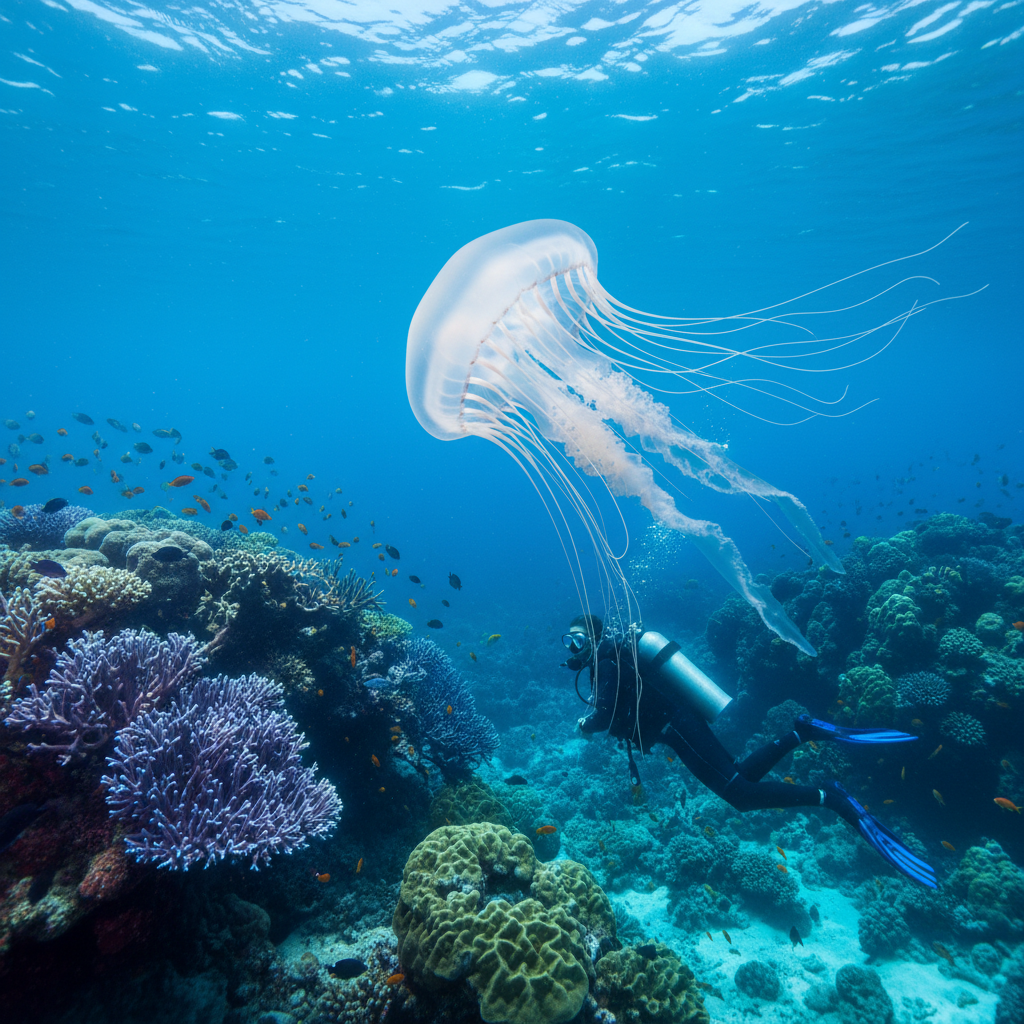
From box jellyfish tentacles to sea urchin spines lodged deep in your heel, the ocean's defences are relentless — and knowing how to respond correctly can mean the difference between a minor inconvenience and a medical emergency. Here's everything divers, freedivers, spearfishers, and snorkellers need to know about marine stingers and how to treat them.
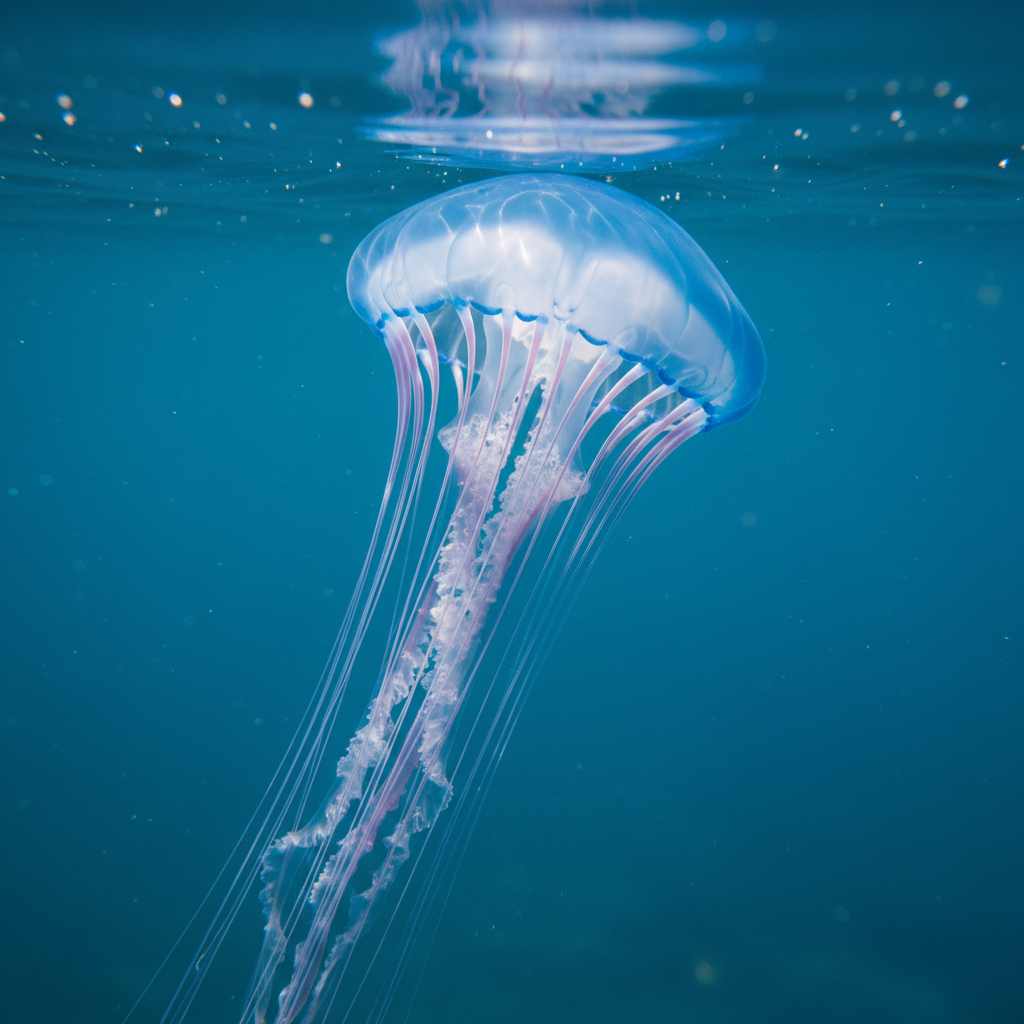
Know Your Enemy: The Most Common Marine Stingers in Australian Waters
Australia is home to some of the most diverse — and dangerous — marine life on the planet, and the waters around the continent are a masterclass in biological defence mechanisms. The two broad categories that divers encounter most often are cnidarian envenomations (jellyfish, bluebottles, hydroids, fire coral) and echinoderm punctures (sea urchins, crown-of-thorns starfish). Each category demands a completely different first aid response, and mixing them up is one of the most common mistakes people make on the beach and the boat.
Among cnidarians, the box jellyfish (*Chironex fleckeri*) holds the grim title of the world's most venomous marine animal. Found in northern Australian coastal waters from October through May, a significant envenomation from a box jelly can cause cardiovascular collapse within minutes. Irukandji jellyfish (*Carukia barnesi* and related species) are tiny — often less than 2.5 cm across — but their sting triggers a delayed syndrome of severe pain, hypertension, and in rare cases, pulmonary oedema. The common bluebottle (*Physalia utriculus*), while rarely life-threatening, is responsible for thousands of stings along Australia's east coast every summer season, causing intense localised burning pain.
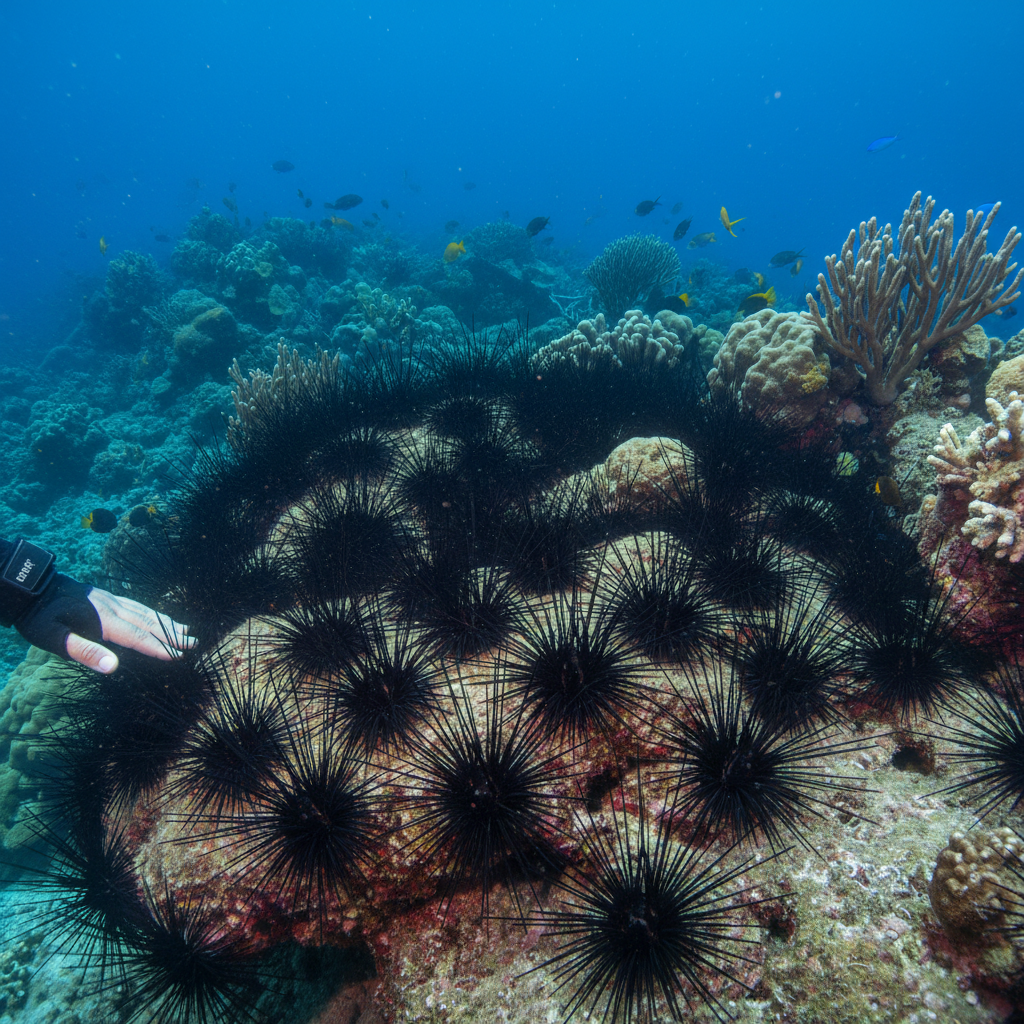
Sea urchins represent the other major threat. Long-spined black urchins (*Diadema* spp.) are ubiquitous on reefs across Indo-Pacific waters, and their brittle, barbed spines break off easily in skin, driving deeper with any attempt to squeeze or pull them. Crown-of-thorns starfish (*Acanthaster planci*) are an increasing hazard as populations boom during bleaching events; their venom-coated spines cause intense pain, swelling, and in some cases, secondary infection if fragments remain embedded. Stonefish (*Synanceia verrucosa*), though technically a fish, deserve mention here — their dorsal spines are among the most medically significant venomous punctures a diver can receive in Indo-Pacific shallows.
The Sting Mechanism: Why Your First Reaction Matters So Much
Understanding the biology behind a sting helps explain why the first sixty seconds of your response are so critical. Jellyfish tentacles are lined with specialised cells called cnidocytes, each containing a coiled harpoon-like structure called a nematocyst. When triggered by pressure or chemical contact, these fire at extraordinary speed — some species discharge in under 700 nanoseconds, making it one of the fastest biological processes known. A single bluebottle tentacle can carry hundreds of thousands of undischarged nematocysts, and rubbing the sting site or rinsing with fresh water causes them to fire simultaneously, dramatically worsening the envenomation.
This is why the old instinct to scrub a jellyfish sting under the tap or rub it with sand is now firmly contradicted by clinical evidence. Research published through the work of the Australian Venom Research Unit and integrated into current Surf Life Saving Australia guidelines confirms that for most jellyfish species — including Irukandji — the correct first step is to rinse with seawater (not fresh water), carefully remove any visible tentacles using tweezers or a card (never bare fingers), and apply heat or cold depending on the species. For box jellyfish stings specifically, the 2019 update to Australian Resuscitation Council guidelines recommends dousing with household vinegar (acetic acid 4–6%) to inhibit nematocyst discharge before removal — a step that is NOT recommended for bluebottle stings, where vinegar can actually worsen the reaction.
For sea urchin spines, the mechanism is purely mechanical and sometimes chemical. The spines themselves are calcium carbonate and dissolve slowly in tissue over weeks, which sounds reassuring — but the periosteum (bone lining) can become inflamed, and joint infections are a real risk if spines are near joints. Venom glands are present in some urchin species via pedicellariae (tiny pincer-like organs), but in most Australian encounters, pain is driven by the physical trauma and secondary inflammation.
Species-by-Species First Aid: What to Do (and What Not to Do)
Getting first aid right for marine stings is not a one-size-fits-all situation — and this distinction genuinely saves lives. Here's the current best-practice breakdown by species:
**Box Jellyfish (*Chironex fleckeri*):** Call 000 immediately for any significant sting — this is a potential cardiac emergency. Flood the area with vinegar for at least 30 seconds to neutralise unfired nematocysts. Do NOT rub. Remove tentacles with tweezers. If the patient loses consciousness or stops breathing, begin CPR. CSL Antivenom is available in northern Australian hospitals and is effective when administered early.
**Irukandji Syndrome:** Symptoms are delayed 5–40 minutes after the sting, beginning with lower back pain, cramps, nausea, sweating, hypertension, and anxiety. Do NOT use vinegar. Rinse with seawater, apply ice packs wrapped in cloth to the sting site, and transport to hospital urgently. There is no antivenom; treatment is supportive, often requiring IV opioids and antihypertensives in a hospital setting.
**Bluebottle (*Physalia utriculus*):** Current Surf Life Saving Australia guidelines (updated 2022) recommend immersing the sting site in hot water (as hot as tolerable, ideally 42–45°C) for at least 20 minutes, which degrades the venom proteins through heat denaturation. Do NOT use vinegar. Remove tentacles carefully. Cold packs can be used if hot water is unavailable, though evidence for cold is weaker.
**Sea Urchin Spines:** Do NOT attempt to dig spines out with needles — you risk breaking them further and introducing infection. Soak the area in warm water to soften skin and reduce pain. Small, superficial spines may work their way out naturally over 1–2 weeks. Spines near joints, in the face, or causing significant swelling warrant medical removal. A doctor may use a fine-point technique under local anaesthetic. Watch carefully for signs of infection: increasing redness, warmth, pus, or fever.
**Crown-of-Thorns Starfish:** Treat like sea urchin punctures but expect more pronounced venom-driven inflammation. Hot water immersion (as with bluebottle) helps neutralise some of the saponin-based toxins. Seek medical care for multiple punctures.
Building Your Marine First Aid Kit: What Every Diver Should Carry
A well-stocked first aid kit tailored for marine environments is as essential as your dive computer or weight belt. Generic pharmacy kits simply aren't built for what you'll encounter on a reef. Here's what belongs in every diver's kit, whether you're heading out on a liveaboard in the Coral Sea or snorkelling off the rocks in Sydney:
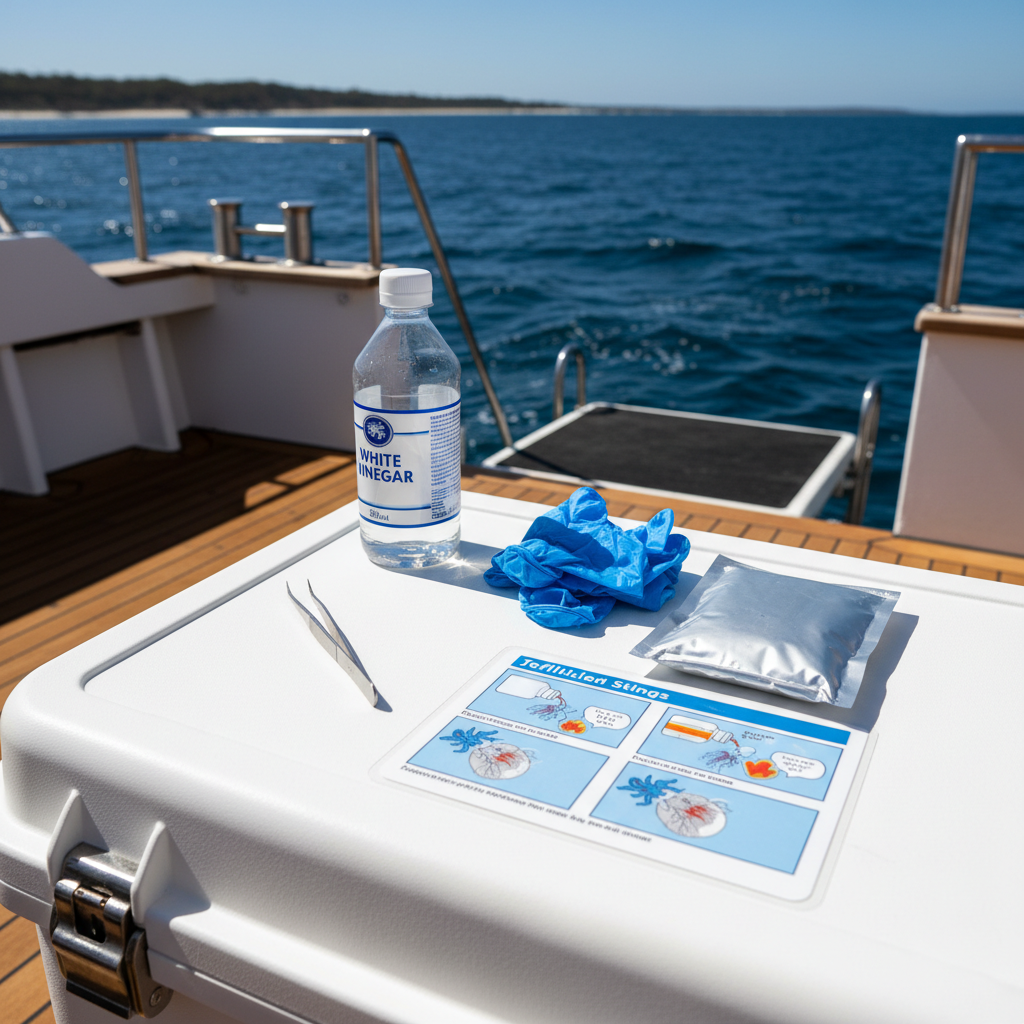
**Vinegar (acetic acid 4–6%):** A small 500 mL bottle is standard on professional dive boats and should be in every kit for northern Australian waters. It's cheap, stable, and can be genuinely life-saving for box jellyfish encounters. Many northern Queensland beach patrolled areas now have vinegar stations as standard infrastructure.
**Portable hot water source or chemical heat packs:** Bluebottle stings are so common on Australian east-coast beaches that this is not optional — it's essential. Fold-flat kettle thermoses or purpose-designed sting treatment packs (such as the Stingose heat pack range) are compact and effective. Aim for 42–45°C — uncomfortable but not scalding.
**Tweezers and disposable gloves:** Never remove tentacles or spines with bare hands. Fine-tipped tweezers allow precise removal without triggering additional nematocyst discharge. Gloves protect the first-aider.
**Pressure immobilisation bandages:** Required for blue-ringed octopus and cone snail encounters (neurotoxic envenomations where pressure immobilisation is the correct response). These are NOT appropriate for jellyfish or sea urchin injuries.
**Waterproof first aid reference card:** In a high-stress situation on a rocking boat, memory fails. Laminated quick-reference cards covering species-specific treatment protocols (available from DAN Asia-Pacific and SLSA) are invaluable for both crew and divers.
Prevention in the Water: Gear, Awareness, and Dive Practices That Reduce Your Risk
The best treatment for a marine sting is, of course, not getting stung in the first place. Modern dive and snorkel practice offers a range of genuinely effective preventive strategies that go far beyond simply 'looking where you put your hands.'
Full-length lycra or neoprene exposure suits are your first physical barrier. A 3 mm full wetsuit covers almost all sting-prone skin and provides meaningful protection against bluebottle tentacles, hydroids, and brushes with fire coral. In summer months in northern Queensland, a stinger suit — the thin full-length lycra garment worn by swimmers at patrolled beaches — is widely recommended even for snorkellers in waters where Irukandji and box jellyfish are active. These suits don't provide complete protection (Irukandji nematocysts can penetrate thin lycra in some cases) but they substantially reduce the risk and the area of exposure.
Situational awareness underwater is a skill that develops over hundreds of dives, but new divers can accelerate it with deliberate practice. Avoid placing hands on any reef surface — not just for your safety, but for the reef's. Watch your fin kicks in shallow water to avoid stirring up cryptic stonefish and urchins from sandy substrate. Spearfishers working kelp beds should be especially wary of long-spined urchins hidden among holdfasts, and should wear thick gloves as standard. Freedivers and spearfishers working at depth should review any recently speared fish carefully before stowing it — getting a spine from a lionfish (*Pterois* spp.) while distracted on ascent is surprisingly common.
Finally, check current conditions before every dive. VisPro Dive's marine life activity layer and user-reported sighting tags can give you real-time awareness of jellyfish bloom events, urchin barrens, and crown-of-thorns activity in your dive area. Jellyfish blooms are increasingly well-predicted through current and wind modelling — a bloom moving onshore overnight on a northerly wind is a strong signal to choose a sheltered alternative site or delay the dive. Conditions knowledge is prevention knowledge.
When It's More Than Just a Sting: Recognising a Medical Emergency
The vast majority of marine stings are painful, frightening, and deeply unpleasant — but not life-threatening. However, a small percentage of encounters escalate rapidly, and the diver who can recognise danger signs and act decisively is the difference between a near-miss and a tragedy.
Systemic allergic reaction (anaphylaxis) can occur from any marine envenomation, just as with bee stings. Watch for hives spreading beyond the sting site, swelling of the face or throat, difficulty breathing, dizziness, or a sudden drop in blood pressure. If any of these appear, administer an EpiPen (epinephrine auto-injector) if available and call 000 immediately. All dive boats operating in Australian waters are legally required to carry EpiPens in their first aid kits under Maritime Safety regulations.
For Irukandji syndrome specifically, the critical danger signs are severe hypertension and pulmonary oedema (fluid on the lungs), which can develop rapidly in the 2–4 hours following the sting. Patients describing an overwhelming sense of impending doom — a hallmark clinical sign called 'anxiety of impending doom' — should be taken with absolute seriousness and transported to hospital regardless of how minor the initial sting appeared. Several fatalities attributed to Irukandji in Australian waters involved a failure to seek timely hospital care after a seemingly small sting from an invisible animal.
Dive instructors, divemasters, and trip leaders should ensure their emergency action plan includes clear protocols for marine envenomation, not just decompression illness. Oxygen — already carried on most dive vessels — provides symptomatic relief for some envenomation patients and supports management during evacuation. Know your nearest hyperbaric and emergency facility before you enter the water, and always dive within range of a reliable communication device.